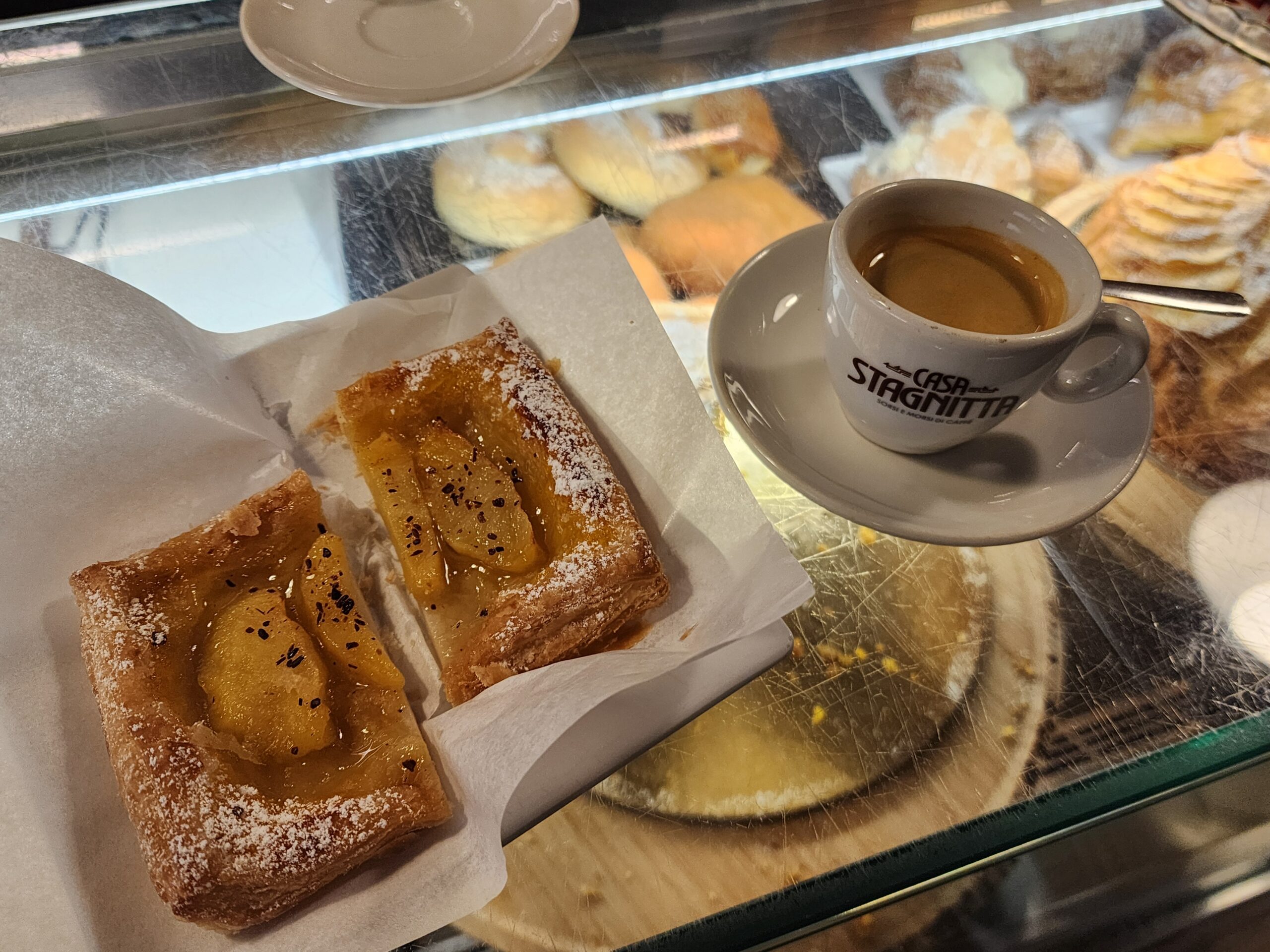
At Casa Stagnitta, the old roastery on Discesa dei Giudici in Palermo, you can skip the house blend and order Jamaica Blue Mountain as an espresso. It comes in the same thick white cup as everything else, on the same counter, next to whatever pastry you picked. Ours came with two fruit pastries under a snow of powdered sugar. One of the world’s most expensive coffees, drunk standing up.
Blue Mountain’s reputation rests on what it leaves out. A good cup is mild and clean, with little bitterness and soft acidity. People expecting the fruit and perfume of a Geisha often come away puzzled. People who drink their coffee black and want it smooth tend to get it right away.
Where It Comes From
Only coffee grown in a defined area of Jamaica’s Blue Mountains, in the parishes of Saint Andrew, Saint Thomas, Portland and Saint Mary, can carry the name. The trees are mostly Typica, an old arabica variety brought to the island in 1728. Mist and cloud sit on the slopes much of the day, so the cherries ripen slowly. Coffee from lower ground elsewhere in Jamaica is sold as Jamaica High Mountain or Jamaica Supreme.
A government body, the Jamaica Agricultural Commodities Regulatory Authority (JACRA), certifies the coffee and controls the trademark, which is also registered in the US, the UK and the EU. Green beans traditionally ship in small wooden barrels. Japan has long bought most of the crop. That’s a big reason it’s hard to find in Europe at all, and why seeing it on a Sicilian bar menu is a small surprise.
Hurricane Melissa Cut the Crop
Melissa hit Jamaica on October 28, 2025, a year after Hurricane Beryl. The island’s coffee exporters say output fell from about 288,000 boxes of cherry in 2023/24 to an estimated 150,000 this season. Close to half. Melissa alone wiped out about 40% of the mature crop. Trees came down, farm roads were blocked, and JACRA spent the winter handing out fertiliser, seedlings and even chainsaws so farmers could clear their land. Lost export earnings for the season are put at about US$15 million.
Each box is also giving less coffee. A box of cherry used to yield about 9 pounds of green beans, and now it can be as little as 7.5. Jamaica has been importing more coffee for its own cafés to fill the gap. For buyers abroad it means less certified Blue Mountain and higher prices for a while yet, since newly planted trees take years to bear a full crop.
How to Buy the Real Thing
The name gets copied all the time. A bag marked “Blue Mountain blend” or “Blue Mountain style” may hold only a small share of Jamaican beans, or none. Look for “100% Jamaica Blue Mountain”, the JACRA certification mark and a named estate or exporter. If the price looks like an ordinary supermarket bag, it isn’t the real thing. On Amazon, search for 100% Jamaica Blue Mountain coffee and check the listing for the certification mark before you buy.
Brew it gently. A medium roast as pour-over shows it best. As espresso, the way Stagnitta serves it, keep it short and drink it black. Milk smothers the very thing you’re paying for, so it’s a poor choice for a cortado. For milk drinks, our guide to espresso beans for milk drinks has far better value.
For the other end of luxury coffee, see how Geisha coffee hit $30,204 a kilo at auction. And for the beans that set everyday prices, there’s Brazil’s record 2026 crop.
A small cup from a short crop. The trees will take years to come back.
As an Amazon Associate I earn from qualifying purchases.