Ask for un caffè in an Italian bar and you’ll get an espresso. There’s no size to choose, and nobody at the counter calls it an espresso anyway. The word covers the shot. Everything else is a change to it: a bit more water, a spot of milk, a glass in place of a cup.
The word that catches visitors out is latte. In Italian it means milk, so a “latte” can get you exactly that. If you drink cortados, the order to learn is the macchiato, and in Trieste it’s the capo in b. The bar’s etiquette, from paying first to the cappuccino cutoff, is in our post on Italian espresso bar rules. This one is about the words.
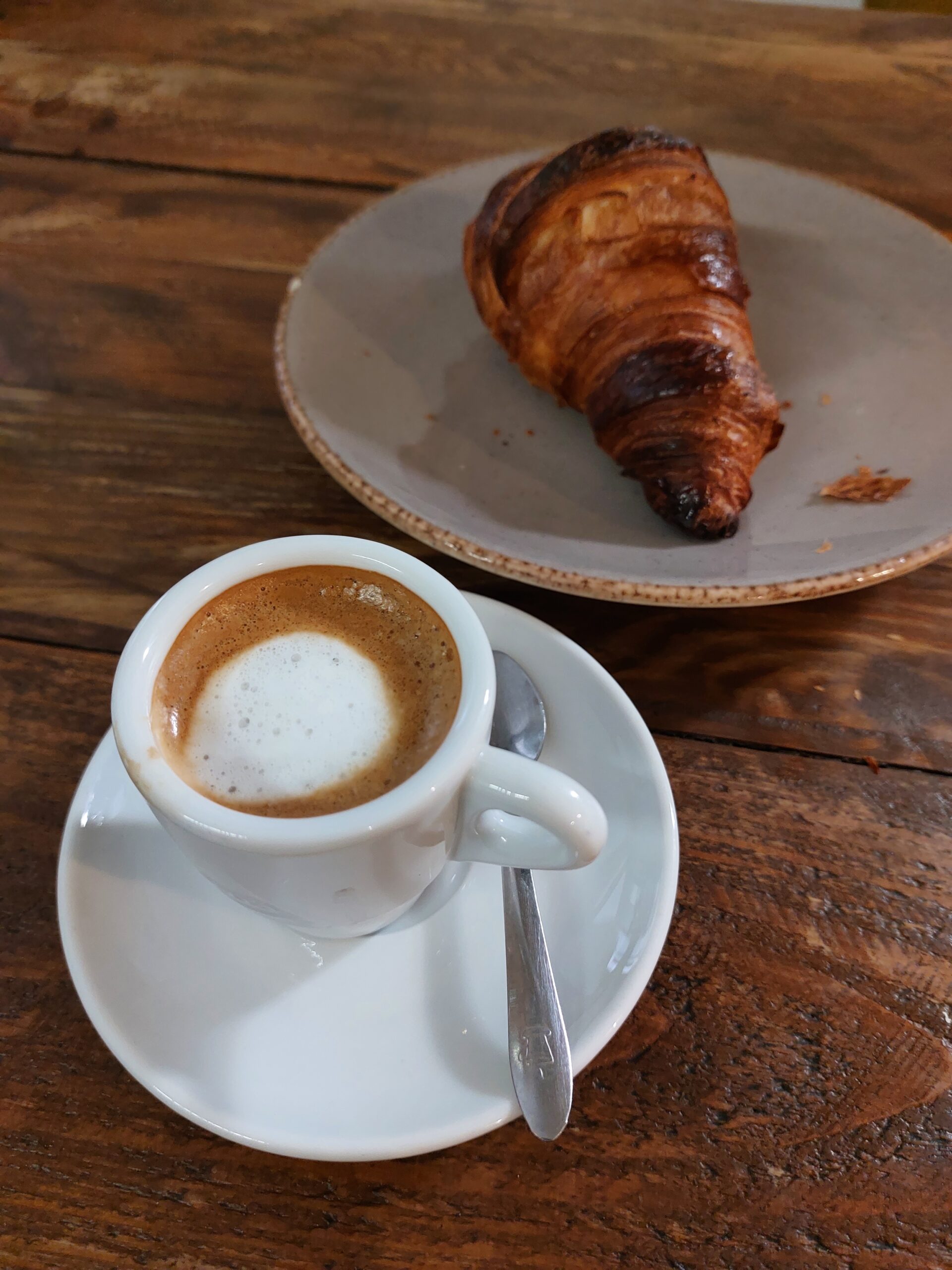
Un Caffè and the Words That Change It
Some baristas will check with a quick normale?, which just means the standard shot. From there you adjust it:
- Ristretto: less water. Shorter, thicker, stronger tasting.
- Lungo: more water run through the coffee. A little longer and lighter.
- Doppio: a double espresso.
- Americano: an espresso topped up with hot water. Some bars bring the water in a small jug so you can thin it yourself.
- In vetro: served in a small glass. You can ask for almost any coffee this way, and plenty of regulars always do. There’s a whole tradition behind it, which we cover in why cafés serve coffee in glass.
- Decaffeinato: decaf, cut down to deca at the counter. Older customers still ask for un Hag, after the brand.
Two more show up on almost every bar menu. Caffè d’orzo is brewed from roasted barley and has no caffeine at all. Caffè al ginseng is the odd one. It’s sweet and creamy, comes in a small or a large cup, and makes up around 3% of what Italian bars pour, more than decaf. Most bar versions are an instant mix of soluble coffee, sugar, milk powder and a trace of ginseng. Coffee purists roll their eyes. A lot of people order it every morning anyway.
Latte Means Milk
Ask for un latte and a literal-minded barista will pour you warm milk. Bars near the big sights have mostly learned what visitors mean. Outside them, don’t count on it.
The milk coffees line up like this:
- Cappuccino: espresso with steamed milk and a thick cap of foam, in a cup. You can ask for it chiaro (more milk), scuro (more coffee), senza schiuma (no foam) or tiepido (lukewarm, so you can drink it straight away).
- Caffellatte: coffee with plenty of hot milk and little foam. It’s the nearest thing to what the rest of the world calls a latte.
- Latte macchiato: a tall glass of hot milk with espresso poured in on top, so it sits in layers. The milk is the drink and the coffee is the mark on it.
- Caffè macchiato: the other way round, an espresso marked with milk.
The cappuccino really is a morning drink in Italy, though nobody will refuse to make you one at four in the afternoon. The macchiato is the milk coffee Italians drink at any hour.
Macchiato Caldo or Macchiato Freddo
Order un macchiato and the barista may come back with caldo o freddo? Caldo gets you a spoonful of hot foamed milk on the shot. Freddo gets you a splash of cold milk from a jug on the counter, which takes the edge off the heat so you can drink it at once. Either way it arrives in the espresso cup, with far less milk than a cortado’s roughly equal measure. We set the two side by side in cortado vs macchiato.
Want something closer to a cortado? Ask for a macchiato caldo in a glass with a little more milk. Most baristas won’t blink. In one Italian city, though, you won’t need to explain yourself at all.
Trieste Has Its Own Coffee Language
Trieste was the Habsburg empire’s great port, coffee has come through it for centuries, and Illy was founded there in 1933. Its bars also use a vocabulary you won’t hear anywhere else in Italy:
- Nero: an espresso.
- Nero in b: an espresso in a small glass. The b stands for bicchiere, glass.
- Goccia or gocciato: an espresso with a single drop of milk foam in the middle.
- Capo: espresso with hot milk and foam in a small cup, roughly a macchiato.
- Capo in b: the same in a small glass. This is the city’s signature order.
- Capo chiaro or capo scuro: a lighter or darker capo, with more milk or more coffee.
- Capo in b tanta: in a glass with lots of foam.
- Caffelatte: in Trieste, this is what everywhere else calls a cappuccino.
- Deca: decaf, and it bolts onto anything. A decaf capo in a glass is a capo deca in b.
The capo in b is the closest thing to a cortado you’ll find in an Italian bar: espresso and warm milk with a little foam, in a small glass you can see through. If you know the cortado, you’ll feel at home with it on the first sip.
Don’t take the words with you when you leave, though. Elsewhere in Friuli Venezia Giulia, ask for a nero and you may be handed a glass of red wine.
Regional Coffees Worth Ordering by Name
Marocchino, from Alessandria in Piedmont. A small glass dusted with cocoa, then espresso, then milk foam and more cocoa on top. Bar Carpano, across the street from the Borsalino hat factory, usually gets the credit, and the name is said to come from the brown marocchino leather that lined the hats. It’s spread across the north since, and some bars sell a similar drink as an espressino.
Bicerin, from Turin. Espresso, thick hot chocolate and lightly whipped cream, layered in a small glass. Caffè Al Bicerin on Piazza della Consolata opened in 1763 and claims the drink as its own. Don’t stir it. The point is the cool cream first and the hot chocolate coffee underneath.
Caffè alla nocciola, from Naples. Espresso whipped with a sweet hazelnut cream, usually credited to Il Vero Bar del Professore near Piazza Trieste e Trento in the 1990s. Neapolitan coffee is dark and strong to begin with, often from blends with plenty of robusta, and it’s the city where your espresso comes with a glass of water and where you can leave a caffè sospeso for a stranger.
Caffè leccese, from Lecce in Puglia. A summer drink: hot espresso poured over ice and sweetened with almond syrup, the thick latte di mandorla of the south. Many bars bring the hot coffee and the glass of ice and syrup separately, and you pour the one into the other yourself. At home it works just as well with a moka pot.
Caffè shakerato, all over Italy in summer. Espresso shaken hard with ice and a little sugar syrup, then strained, frothy and cold, into a stemmed glass.
Granita di caffè, from Sicily. Coffee granita under a spoonful of whipped cream, often eaten for breakfast on hot days with a soft brioche alongside.
A Short Ordering List
Start with buongiorno, then the drink and per favore. That’s all the Italian you need.
- Un caffè: an espresso.
- Un macchiato caldo or freddo: espresso with hot foam or a splash of cold milk.
- Un cappuccino: before 11, if you want to blend in.
- Un caffellatte: the big milky one. Say un latte and you may get milk.
- Un latte macchiato: a tall glass of milk with espresso on top.
- Un deca: decaf, with any of the above.
- In vetro: add it to any order to get a glass.
- Un capo in b: Trieste only. The cortado drinker’s order.
- Un marocchino: in the north, when you want cocoa with it.
If you only learn one, make it un macchiato caldo, per favore. In Trieste, un capo in b.