In a Naples bar the glass of water often lands on the counter before the coffee does. In a Brussels café the extra is a biscuit in a red wrapper, sitting next to your cup. Neither one costs you anything, and neither one is an accident.
What comes with a coffee is one of those small things that tells you where you are. Some of these extras are old habits of hospitality. Others started as a clever bit of marketing by biscuit makers and coffee roasters.
The Glass of Water in Naples
In Italy a glass of water with an espresso is common, and in Naples and the south it’s standard. You drink it first, to clean your mouth so the coffee tastes of coffee. Traditional Neapolitan bars pour it lightly sparkling, and it’s free even if you don’t order anything. Further north it’s less automatic, and some bars charge for it. Italians also argue about whether it belongs before the coffee or after, but in Naples the answer is before.
Italian bars sometimes add a small wrapped chocolate on the saucer too. For the rest of the ritual, from standing at the counter to the cappuccino cutoff, see our Italian espresso bar rules.
Vienna’s Silver Tray
In a Viennese coffee house your coffee comes on a small silver tray with a glass of water and a spoon laid beside it. Stay a while and the waiter will bring more water without being asked. The usual explanation is that the glass first gave customers somewhere to rest the spoon. It became a point of pride after 1873, when the First Vienna Mountain Spring Pipeline started bringing fresh water from the Alps into the city, and the coffee houses wanted to show it off. Our guide to Vienna’s coffee houses covers the rest of the ritual, including why one coffee buys you the whole afternoon.
Turkish and Greek Coffee
Turkish coffee comes with water as a matter of course. When UNESCO added Turkish coffee culture and tradition to its list of intangible heritage in 2013, the description noted that it’s served in small cups with a glass of water, and a piece of lokum, Turkish delight, often comes alongside. You sip the water first to clear your palate for the thick, strong coffee. Greek coffee, its close relative, comes with a glass of water too. Our Turkish coffee post covers how it’s brewed.
The Biscuit on the Saucer
The biscuit habit belongs to Belgium and the Netherlands, and it’s largely the work of one company. Lotus Bakeries was founded in 1932 in Lembeke, in East Flanders, making caramelized speculoos biscuits. In 1956 it began selling them to Belgian cafés and restaurants as the biscuit to serve with coffee, wrapped one at a time. It worked so well that in 1986 the biscuit took the name Biscoff, from biscuit and coffee, which was easier to sell abroad. Delta started handing them out on its flights around the same time, which is how a lot of Americans came to know them.
In the Netherlands a small sweet on the saucer is close to a rule, very often a wrapped speculoos. France has its own version, the napolitain, a small wrapped square of chocolate that the Weiss chocolate company has been making to go with coffee since the early 20th century. If you’re ordering in France, our guide to how to order coffee in France explains the rest, including the free carafe of water.
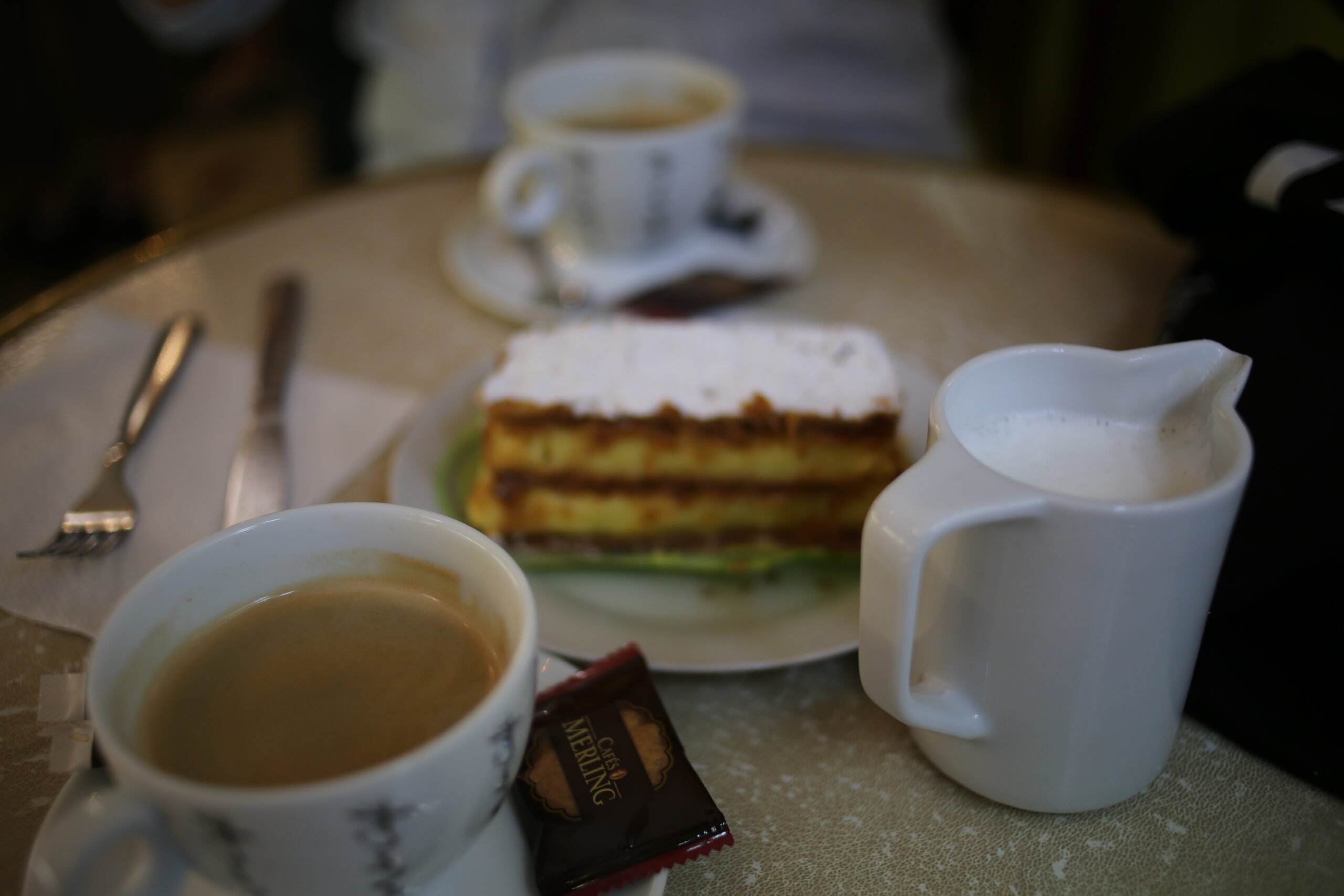
A lot of these little extras come from the coffee roaster. French roasters supply cafés with branded biscuits and chocolates along with the beans. The biscuit in the photo below is wrapped in the colors of Cafés Merling, a roaster founded in La Rochelle in 1979 that now supplies thousands of cafés, hotels and restaurants in western France. It’s advertising you can eat, and it puts the roaster’s name in front of every customer who orders a coffee.
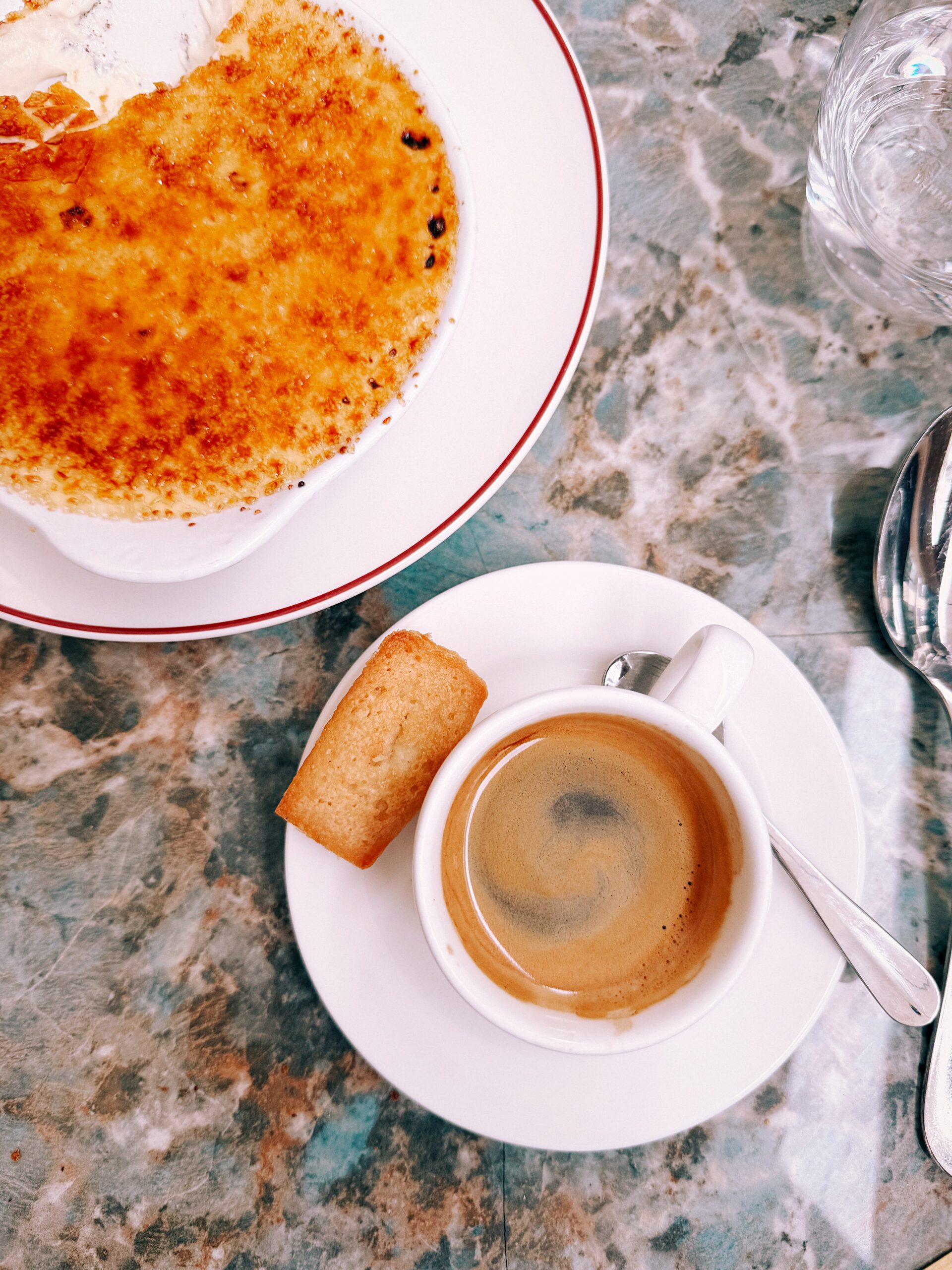
The financier in the first photo is a French pastry-shop staple, a small almond cake made with browned butter and egg whites. It’s usually said to be named for the bankers of the Paris stock exchange district, shaped like a gold bar for them, though that story is disputed. Its ancestor was a small almond cake baked by Visitandine nuns in the 17th century.
Whatever the local version, the pairing works for the same reason. Something sweet and buttery takes the edge off coffee’s bitterness, and a biscuit you can finish in two bites doesn’t turn a quick coffee into a meal. For bigger pastries and which coffee suits them, see what to eat with a cortado.
Further Afield
In Buenos Aires, a cortado after lunch often brings a tiny sweet on the saucer, a mini alfajor or an amaretti-style biscuit, as we noted in our Buenos Aires cortado guide. Japan took the idea much further. In Ichinomiya, near Nagoya, a café owner in the late 1950s started adding a boiled egg and peanuts to the morning coffee of the local textile-mill owners, and “morning service” spread across the region. The Nagoya chain Komeda Coffee, founded in 1968, still includes toast and a boiled egg with any drink ordered before 11 in the morning.
Whatever’s on the saucer, it’s there for the same two reasons: to make you feel looked after, and to bring you back.