• Skip to main content
  • Skip to secondary menu
  • Skip to footer

Espresso Cortado

  • Sponsored Post
  • About
    • GDPR
  • Contact

Arabica vs Robusta: Why Italian Espresso Blends Still Use the Cheaper, Stronger Bean

October 10, 2026 By admin

Nearly all the coffee in the world comes from two species: Coffea arabica and Coffea canephora, better known as robusta. Specialty coffee has spent decades teaching people that arabica is the good one. The truth is messier, and Italian espresso bars have known it all along.
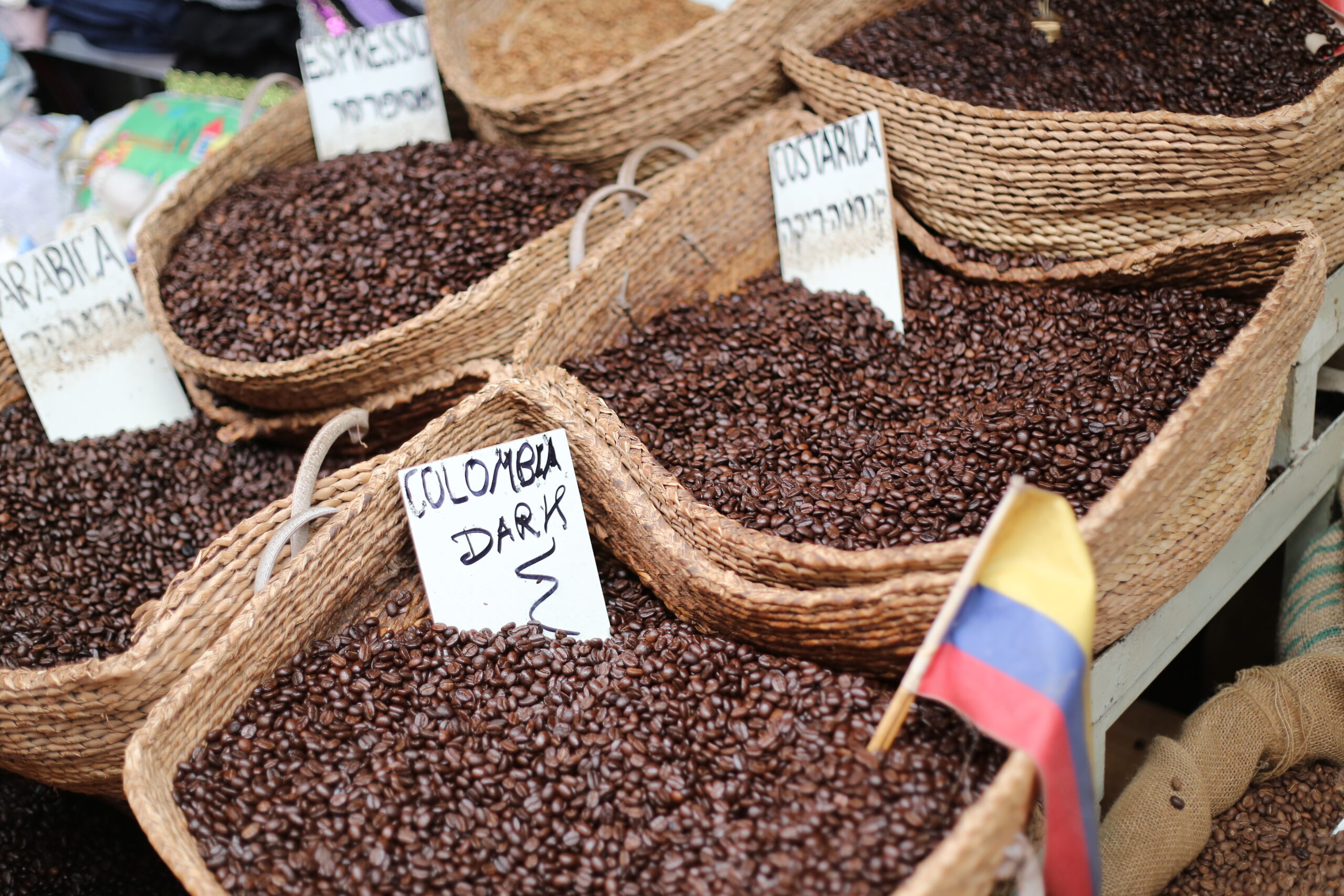
Baskets of Roasted Coffee Beans Labeled by Origin

Two Very Different Plants

Arabica is a natural cross between robusta and another species, Coffea eugenioides, and it carries four sets of chromosomes, 44 in all. It can pollinate itself. That’s handy for farmers, but it leaves the species with little genetic variety and weak defenses against diseases like leaf rust. Robusta has the usual two sets, 22 chromosomes, and can’t pollinate itself, so every tree comes from a cross and the species is far more diverse.

They like different places, too. Arabica does best at a mean temperature of about 18 to 21°C and is mostly grown between roughly 900 and 2,100 meters up. Robusta is the lowland coffee, grown from sea level to about 800 meters, and it was long thought to love heat. That’s only half true. A 2020 study of about 800 farms in Vietnam and Indonesia found robusta yields peak at around 20.5°C and drop about 14% for every degree above that.

What’s in the Bean

Green bean, share of dry weight Arabica Robusta
Caffeine About 1.2% on average About 2.2% on average
Sucrose 5 to 9.5% 4 to 7%
Oil About 15% on average About 10% on average
Chlorogenic acids 4 to 8.4% 7 to 14.4%

That table explains most of the difference in the cup. Robusta has less sugar and more of the compounds that taste bitter and astringent, and caffeine itself is bitter. Arabica has more sugar and oil, which roast into sweetness and aroma. The averages hide a lot of overlap, though. A carefully grown robusta can beat a poor arabica.

Who Grows Which

Estimates for the 2025/26 season put arabica at a little over half of world output and robusta at a little under half, depending on who’s counting. Robusta’s share has climbed from about a quarter in the early 1990s to 40% or more. Brazil leads arabica, followed by Colombia, Ethiopia, Honduras and Peru. Vietnam leads robusta, with Brazil second, then Indonesia, Uganda and India. Brazil’s robusta crop hit a record in 2025/26.

Why Italian Espresso Blends Use Robusta

Price is the obvious reason. In August 2026 robusta sold for a little over half the price of Brazilian natural arabica, and futures are still far apart. But Italian roasters don’t use it only to save money. Robusta adds body and caffeine, and it helps a shot hold its own under milk. France, Spain and Greece have long blended it too.

Then there’s crema. The usual line is that robusta makes more of it. Lab tests are less sure. One study found no real difference in how much foam the two produce, but robusta’s lasted much longer, about 49 minutes against 34 at a medium roast. That stability is part of why a robusta blend looks so good in the cup.

For a cortado, a blend with some robusta makes sense. Milk mutes flavor, and robusta’s weight and bitterness cut through it in a way a delicate arabica often can’t. Most specialty cafés still pour 100% arabica, and there’s a small movement for high-quality “fine robusta” too. The quickest way to decide is to try both in the same drink, side by side.

Filed Under: Coffee Break Tagged With: Arabica, Coffee Varieties, Espresso, Italy, Robusta

Footer

Recent Posts

  • US Tariffs on Brazilian Coffee: What the 50% Duty Did to Prices Before Coffee Was Exempted
  • Brazil’s Coffee Crop in 2026: A Record 67.6 Million Bags From an On-Year Harvest
  • Milk Pitcher Size for a Cortado: A 12 oz Jug Beats a 20 oz One for Small Drinks
  • Rancilio Silvia Pro X vs Lelit MaraX3: Dual Boiler or Heat Exchanger at Around $2,000
  • DF64 Single-Dose Grinder: 64mm Flat Burrs and Near-Zero Retention for Under $400
  • Gibraltar Coffee: San Francisco’s Cortado, Named After a 4.5-Ounce Glass
  • Liberica and Excelsa: Why the Coffee Species That Failed a Century Ago Is Back
  • Rancilio Silvia V6: A Single-Boiler Machine With No PID That Still Teaches Home Espresso Best
  • Why Your Espresso Comes With a Glass of Water or a Biscuit
  • Buenos Aires Cortado: Argentina’s Most Ordered Coffee and the Lágrima That Reverses It

Media Partners

  • Referently.com
  • 3V.org
  • ZGM.org
Maritime Chokepoints Compared: Hormuz, Bab el-Mandeb, Malacca, Suez and Panama by Traffic and Risk
Hybrid Bonding Explained: How It Works, Why HBM Needs It and Who Supplies the Tools
Leveraged ETFs Explained: Daily Reset, Volatility Decay and Why 3x Isn't 3x Over Time
HBM Explained: How High Bandwidth Memory Works, HBM3E vs HBM4, and Who Makes It
Huawei Sanctions Timeline: Every Major US Action From 2019 to 2026
Military Alert Levels Explained: DEFCON, FPCON, MOPP and EMCON Compared
Entity List Additions Tracker: Chinese Companies Added Since 2019, by Sector
CVE, CVSS and CISA KEV Explained: How Vulnerabilities Are Scored and Prioritized
Diplomatic Ranks Explained: Ambassador, Envoy, Chargé d'Affaires and Consul
CoWoS Explained: TSMC's Advanced Packaging and Why It Bottlenecks AI Chips
CrossGov's Overlooked Federal Numbers: $13.5 Million Saved on $1 Billion, a 14% Sustain Rate and a 60-Year-Old System Still Running
Press Release Digest: Rubrik Puts Claude Mythos 5 on Code Security, Factory Hits $5 Billion, TeRAM Takes On the AI Memory Wall
Wonderful's $5B Series C: 50x Forward ARR on $154,000 of Revenue Per Employee
Nvidia (NVDA) Buys Hugging Face for $12.9B, Under the $13B Floor Hugging Face Floated Three Days Earlier
Apple's Chinese Memory Push Is a Precedent Problem for $MU and $SNDK, Not a Volume Problem
NYC Sidewalk Sheds and Local Law 11: Why the Shed Is Cheaper Than the Repair
Robots.txt vs Noindex: Why Blocking Crawlers Does Not Remove Pages From Search
Meta's Hyperion Data Center in Louisiana Was Negotiated With Tax Breaks and Little Public Input
Kimi K3 Weights Released as Washington Debates Banning Chinese AI Models
Enigma Raises $70M for Human-Robot Interaction as Multiverse Raises $570M to Shrink Models
CrossGov.com Reads Washington for Market Signals: Section 232 Tariffs, Data Centre Grid Fights, LNG Approvals and a 4% Fed
Mid-September Across the Network: Chokepoints, Memory Prices, and the Crawler Block Landing September 15
YouTube's Creator Partnerships API Turns Influencer Deals Into Programmatic Media Buys
Scripps Cuts 268 Jobs and Rebuilds Local TV News Around Automation
Singapore's GDP Upgrade and CoreWeave's $104 Billion Backlog: The AI Boom Has Reached the Lagging Indicators
SanDisk (SNDK) $4,000 Price Target: The Case Rests on the Multiple, Not the Earnings
ADBE Two-Month High on Topaz Labs FTC Clearance: A Sub-$1 Billion Tuck-In That Buys Gross Margin, Not Features
AI Wrote the Pickup Line and Google Indexed the Conversation
A Ban on Chinese Open Models Would Fail, and Kimi K3 Just Proved It
Together AI Raises $800M Series C at $8.3B Valuation to Scale Open Source Inference

Media Partners

  • Exclusive Domains
  • Dossier.org
  • Briefly.net
DNOS.org Is the Name for the First Domain Name Operating System
BatchComputing.com Names the Gap Between a Shell Loop and Kubernetes
PromptLayering.com Could Become the Category Word for Composable AI Prompts
ModelAggregator.com Is Built for the Multi-Model AI Era
LocalRepository.com Fits the Local-First Artifact Store Developers Want
Aftermarket.dev Is Where Abandoned Software Gets a Second Life
Rewriter.org Is the Natural Home for Open-Source Code Migration
Syndicator.net Brings Content Syndication Back as Publishing Infrastructure
AIInferences.com Names the Observability Layer for AI Model Calls
ReservoirComputing.com Is the Exact-Match .com for an Established Machine Learning Field
Snowflake Hires Database Pioneer Jeff Naughton as AI Raises the Stakes for Data Infrastructure
Network Visits Fall 18% but the Top 10 Sites Grew: Weekly Analytics for September 6 to 12, 2026
China State Shipbuilding Corporation (CSSC): Ownership, Command, Capability, and Sanctions Exposure
NSO Group: Pegasus, Ownership Changes and the Regulatory Position of Commercial Spyware
EDGE Group: The UAE’s Defence Consolidation, Portfolio and Export Ambitions
Reconnaissance General Bureau: North Korea’s Intelligence Command and Its Cyber Units
Office 39: North Korea’s Party Revenue Bureau, Methods and Sanctions History
YMTC: Yangtze Memory Technologies, NAND Capability and Entity List Exposure
SMIC: China’s Largest Foundry, Process Capability and the Limits of Export Control
SASAC: The Holding Structure Above China’s State Enterprises, Powers and Leadership
Halloween’s Biggest Party May Be Staying Home
Yandex Internet Traffic Collapses 99% After Third Drone Strike on Russian Data Centers
OECD Economic Growth Accelerates to 0.7% in Second Quarter, but Recovery Remains Uneven
Sanctions Are Easy to Announce and Hard to Enforce
The AI Infrastructure Boom Is Creating Its Own Bottlenecks
When Good Earnings Are No Longer Good Enough
The Internet Is Filling With Content Nobody Asked For
Tech Digest: OpenAI Weighs an AI Slowdown as Oracle Cloud Revenue Jumps 121%
Balerion AI Raises $6 Million to Bring Agentic AI to Mortgage Origination
Live Nation and Ticketmaster Lose the Core Antitrust Fight

Copyright © 2026 VEspressoCortado.com

Media Partners: Market Analysis · Market Research · Exclusive Domains · Photography · Referently