As an Amazon Associate I earn from qualifying purchases.
Order a cortado in a Spanish bar and there’s a fair chance it arrives in a small glass, too hot to hold anywhere but the rim. Order a galão in Lisbon and it always comes in a tall one.
Glass is an odd choice for a hot drink when you think about it. It gets hot to hold and it shows every drip. Yet plenty of coffee cultures run on it, mostly because you can see what’s in the cup.

You Can See What You’re Getting
In Spain, coffee in a glass is simply normal. A Mallorca roaster put it plainly a few years ago: in the Balearics and across Spain, people drink their coffee from glasses. He called it tradition, and he pointed out what the glass does well, which is to show you how much coffee there is and how much foam sits on top. What it does badly is keep the coffee hot. Ask for your coffee en vaso and you’ll get a glass even where the default is a cup.
Málaga took the idea furthest. In the 1950s, customers at the city’s Café Central showed with their fingers on the glass how much coffee they wanted and how much milk. The owner, José Prado Crespo, turned those finger-widths into named ratios, from solo all the way to nube, a cloud of coffee in a glass of milk, and set them out on a tiled chart. The whole system works only because the glass is clear. We go through all nine names in Málaga’s coffee names.
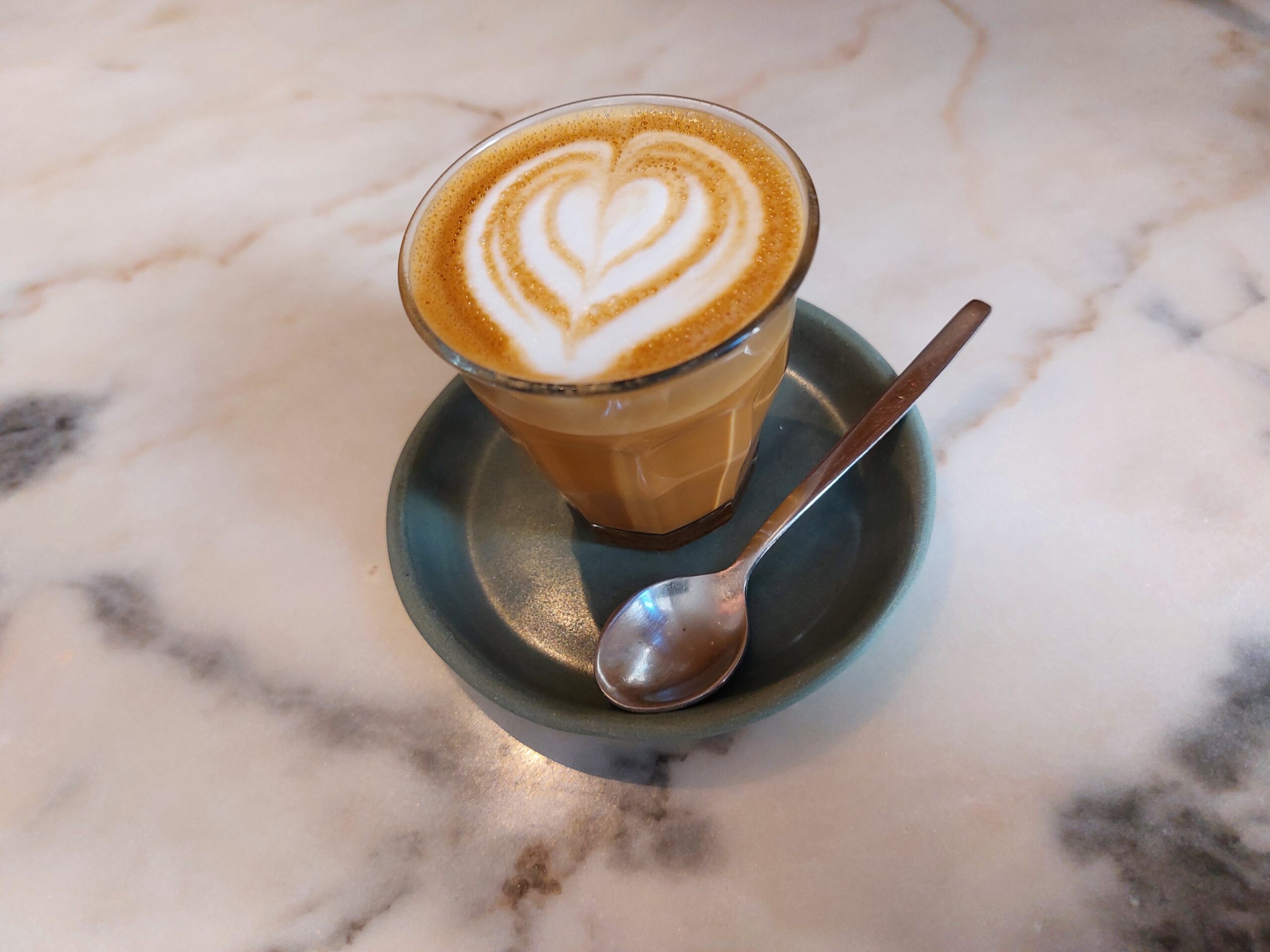
Specialty cafés like glass for the same reason. A cortado in a small glass shows off its color and the thin layer of microfoam on top, and the barista can check the ratio at a glance. In Italy the latte macchiato is built in a tall glass, because the layers are the point: milk at the bottom, a band of espresso in the middle and foam on top.
The Galão Glass
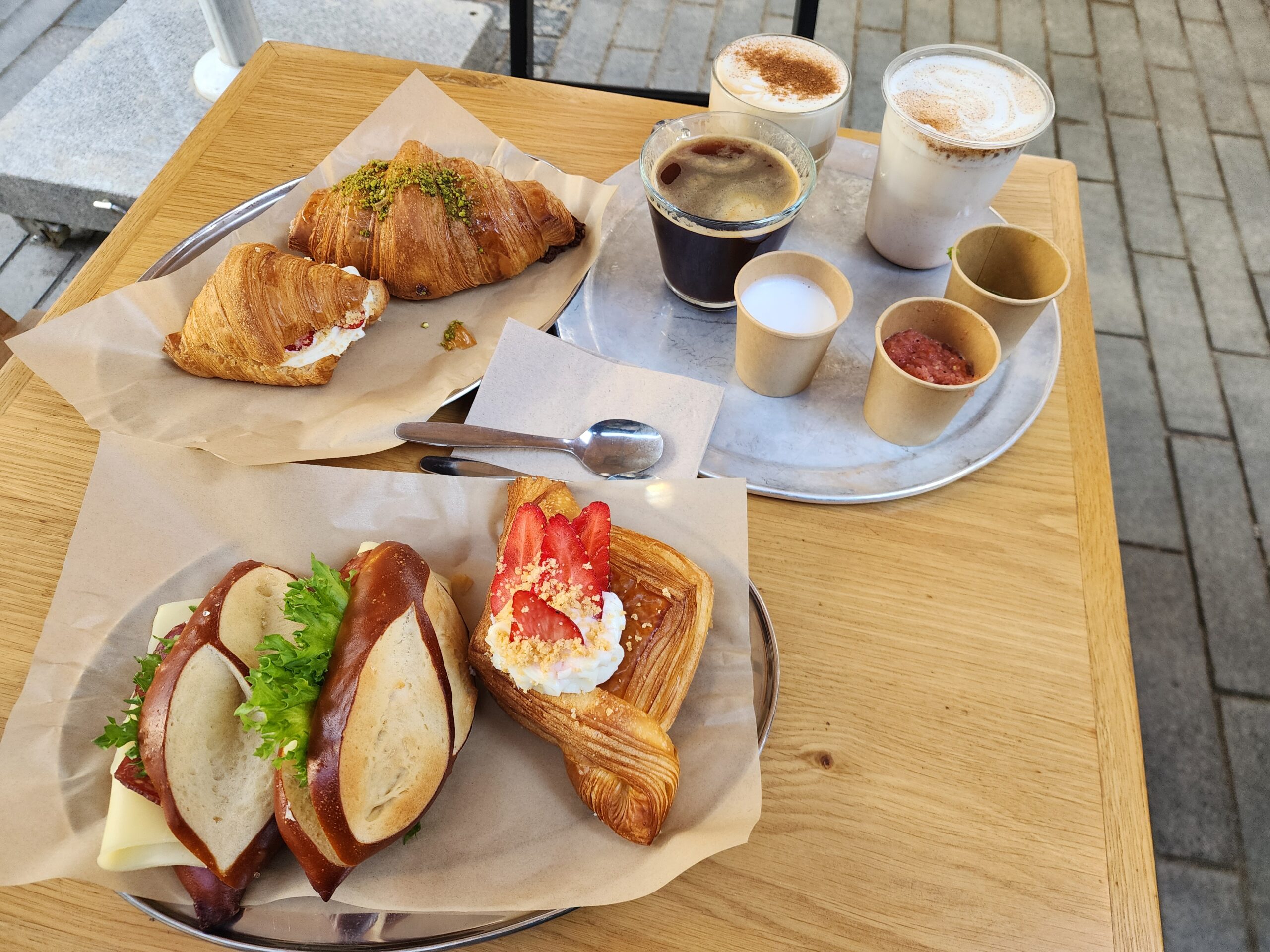
Portugal’s galão is about a quarter espresso and three quarters foamed milk, and it always comes in a tall glass. Served in a cup, the same kind of drink becomes a meia de leite, as our guide to Portuguese coffee orders explains. The name is usually traced to galões, the gold braid on a military uniform, which the band of foam on top is said to resemble.
The glass itself is a small design mystery. It’s thick, heavy at the base and ridged on the outside, and nobody seems to know who first made it. The ridges have a practical side, since they make the glass stronger and hide the scratches that come from being washed hundreds of times. It usually arrives on a saucer with a long spoon, and some cafés slide it into a metal holder with a handle.
The Gibraltar Tumbler and the Duralex Picardie
San Francisco’s contribution is the Gibraltar, a cortado named after the glass it’s served in: the Libbey Gibraltar, a 4.5-ounce rocks tumbler about 8 cm tall. Libbey heat-treats it to stand up to hot drinks and knocks, which helps in a café that runs it through a dishwasher all day. Our cortado glasses guide sets it against the Picardie and other cortado-sized glasses.
In France the café glass is the Duralex Picardie, the faceted tumbler designed in 1954 and made at La Chapelle-Saint-Mesmin, near Orléans. It’s tempered glass. It’s heated to around 600 to 700°C and then chilled fast with cold air, which leaves the surface squeezed tight around the core. A crack has to overcome that squeeze before it can spread, so the glass shrugs off knocks and sudden changes of temperature, and when it does break it goes into lots of small pieces that don’t cut. Generations of French schoolchildren drank from Picardies in the canteen and read the number molded into the bottom as their “age”. James Bond drank whisky from one in Skyfall. Duralex still makes it in amber, too.
The company behind it has had a rough time. After several receiverships, its workers took it over as a cooperative in 2024. In June 2026 it was back in receivership, and in September a court was weighing three offers for it, with a decision due in October.
Caffè in Vetro
Italy is a cup country, and at an Italian bar the espresso normally comes in thick porcelain. Even so, some people order theirs in vetro, in a small glass. Lavazza traces the habit to the south, among customers who wanted to see that what they were drinking from was clean. There’s a taste effect too. Glass cools faster than a thick porcelain cup, so the coffee is drunk a little cooler, and drinkers tend to find it slightly more bitter. In some mountain villages, espresso came in a glass for a simpler reason: nobody had cups.
Does Glass Keep Coffee Hot?
Less well than a thick cup. Glass and porcelain conduct heat at about the same rate, roughly 0.7 to 1.3 watts per meter per kelvin for ordinary soda-lime glass and around 1.5 for porcelain. So the trouble with a café glass is its shape. It’s usually thinner than a mug and has no handle, and heat moves through a thin wall much faster than through a thick one.
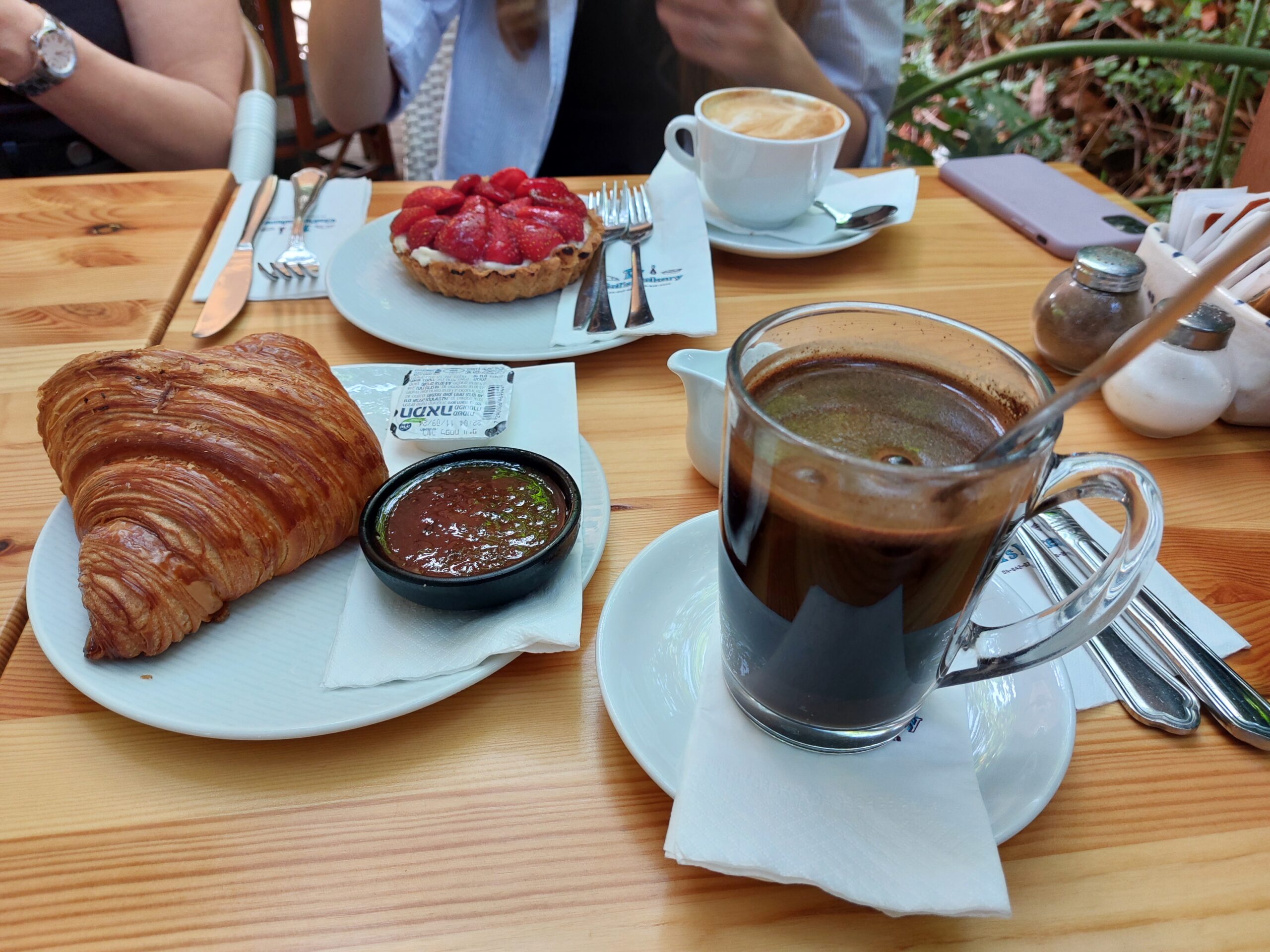
Double-walled glasses fix that. Bodum and others make them from borosilicate glass with a layer of air sealed between two walls, and air conducts heat about forty times worse than glass. The coffee stays hot and the outside stays cool enough to hold. It’s the same idea as the metal holder on a Portuguese galão, done in glass.
A few other coffees nearly always come in glass. Vietnam’s cà phê sữa đá is dripped through a small metal filter onto condensed milk and poured over ice. The Greek freddo espresso is shaken with ice and served tall. Irish coffee has been served in a stemmed Libbey glass at the Buena Vista in San Francisco since the early 1950s. And in Australia a latte traditionally comes in a glass while a flat white comes in a cup, which is one easy way to tell them apart.
So if your cortado comes in a glass, hold it by the rim and have a look before you drink. That’s half the point.