A cortado is gone in a few sips. It’s strong enough that you taste the coffee and soft enough, with its splash of warm milk, to drink without wincing, and that makes it good with food. Most of the places where people drink one have a pastry they reach for at the same moment.
There’s some logic to the pairings. Butter and milk soften coffee’s bitterness, which is why a flaky, buttery pastry and a small milky coffee get along so well. And a rule borrowed from wine applies: a drink that’s less sweet than the food tastes thin and sharp next to it, so very sweet pastries make black coffee taste harsher, and a little milk in the cup helps.
Pastel de Nata in Lisbon
Portugal’s custard tart comes from the Jerónimos Monastery in Belém, where the monks used egg whites to starch their habits and turned the leftover yolks into sweets. When the religious orders were shut down in 1834, the pastries went on sale at a sugar refinery next door, and the shop there has been baking pastéis de Belém since 1837. The exact recipe is known only to the few bakers who work in its “secret room”, and the shop sells more than 20,000 tarts a day. Everywhere else they’re pastéis de nata, eaten warm with a shake of cinnamon and icing sugar.
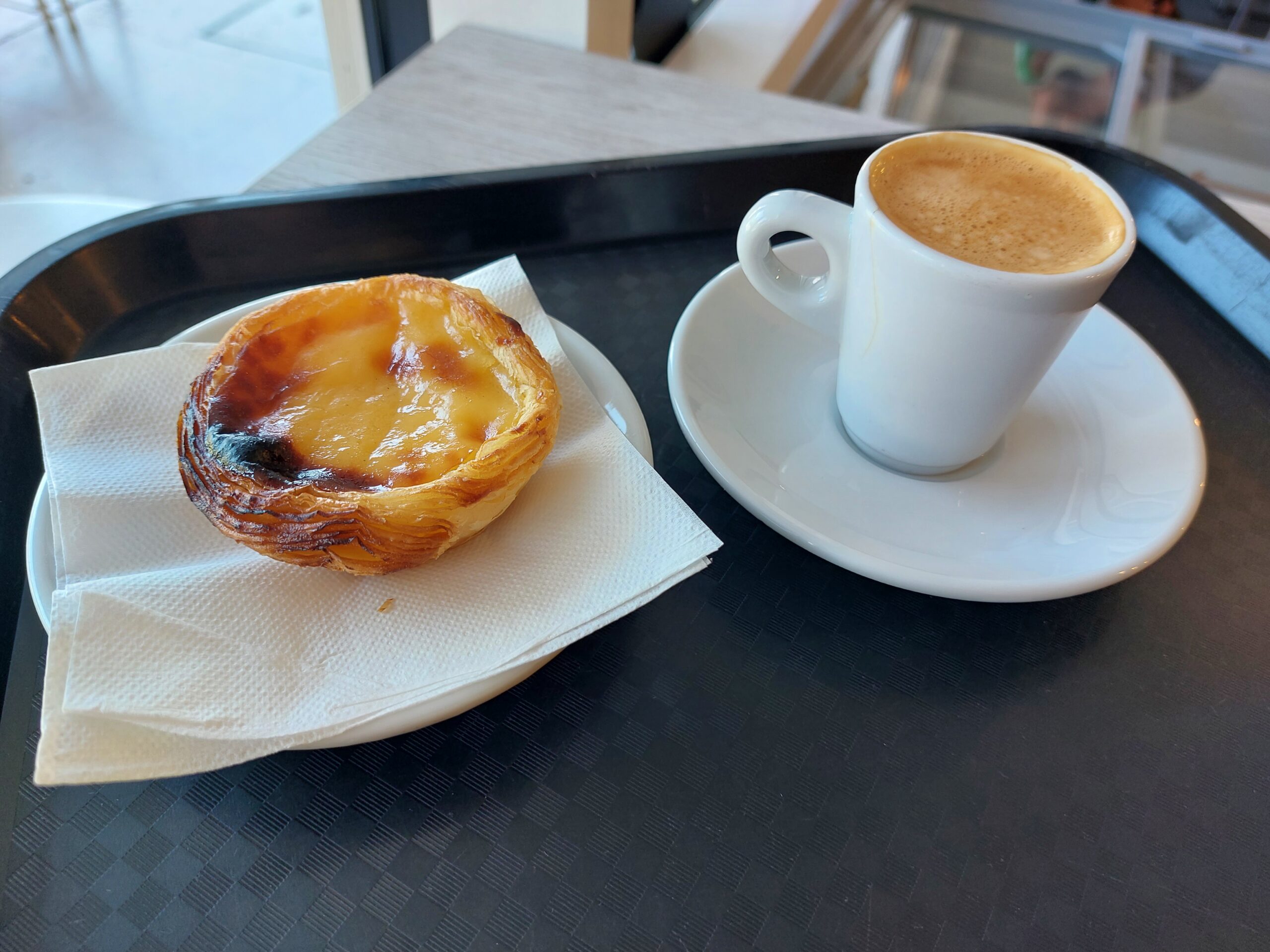
The coffee to go with one is small. Portugal’s nearest thing to a cortado is the garoto, and a pingado or a plain bica works too. Our guide to Portuguese coffee orders sorts out which is which. The custard is rich enough that a big milky galão would just add more of the same.
Palmeras in Spain
A palmera is puff pastry coated in sugar, rolled in from both sides so the two rolls meet in the middle, then sliced and baked into a flat, crackly heart shape. The French call it a palmier and usually date it to the early 20th century, though nobody really knows. Spanish bakeries make them plain, dipped in chocolate or glazed, and the small ones, palmeritas, are just right with a cortado. In Catalonia they’re called ulleres, glasses, for their shape.
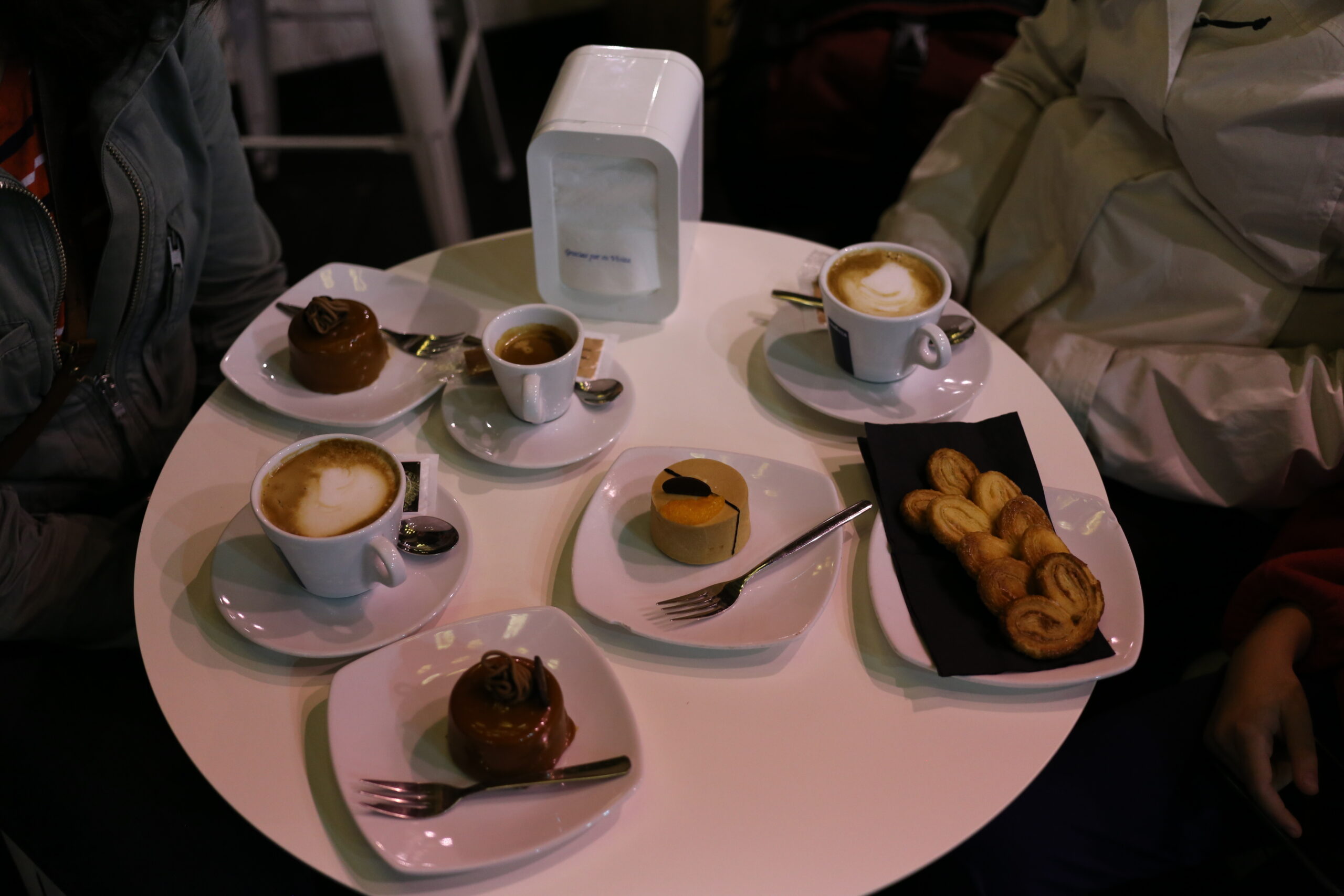
Spain has other things to dunk. Churros go into café con leche at breakfast or into thick hot chocolate later in the day, and Madrid’s Chocolatería San Ginés has been serving them since 1894. A magdalena, a lemon-scented sponge cake baked in a crinkled paper cup, is the simpler option. For the coffee itself, see how to order coffee in Spain.
Medialunas in Buenos Aires
In Argentina coffee rarely comes alone. The classic café breakfast is a cortado or café con leche with medialunas, small croissants that come in two kinds. De manteca are made with butter and brushed with syrup, so they’re soft and sweet. De grasa are made with beef fat, and they’re thinner, crisper and a little salty. The salty ones are the better match for a strong cortado, the sweet ones for a café con leche. There’s more on the city’s coffee in our Buenos Aires cortado post.
Pastelitos at a Miami Ventanita
At the walk-up coffee windows of Miami, the cortadito comes already sweetened, and people buy it with a pastelito, flaky puff pastry filled with guava and cream cheese, or with seasoned beef if you want something savory. Croquetas are the other standby. The guava’s sharpness cuts through a sugary coffee nicely.
Croissants and Other Butter Pastries
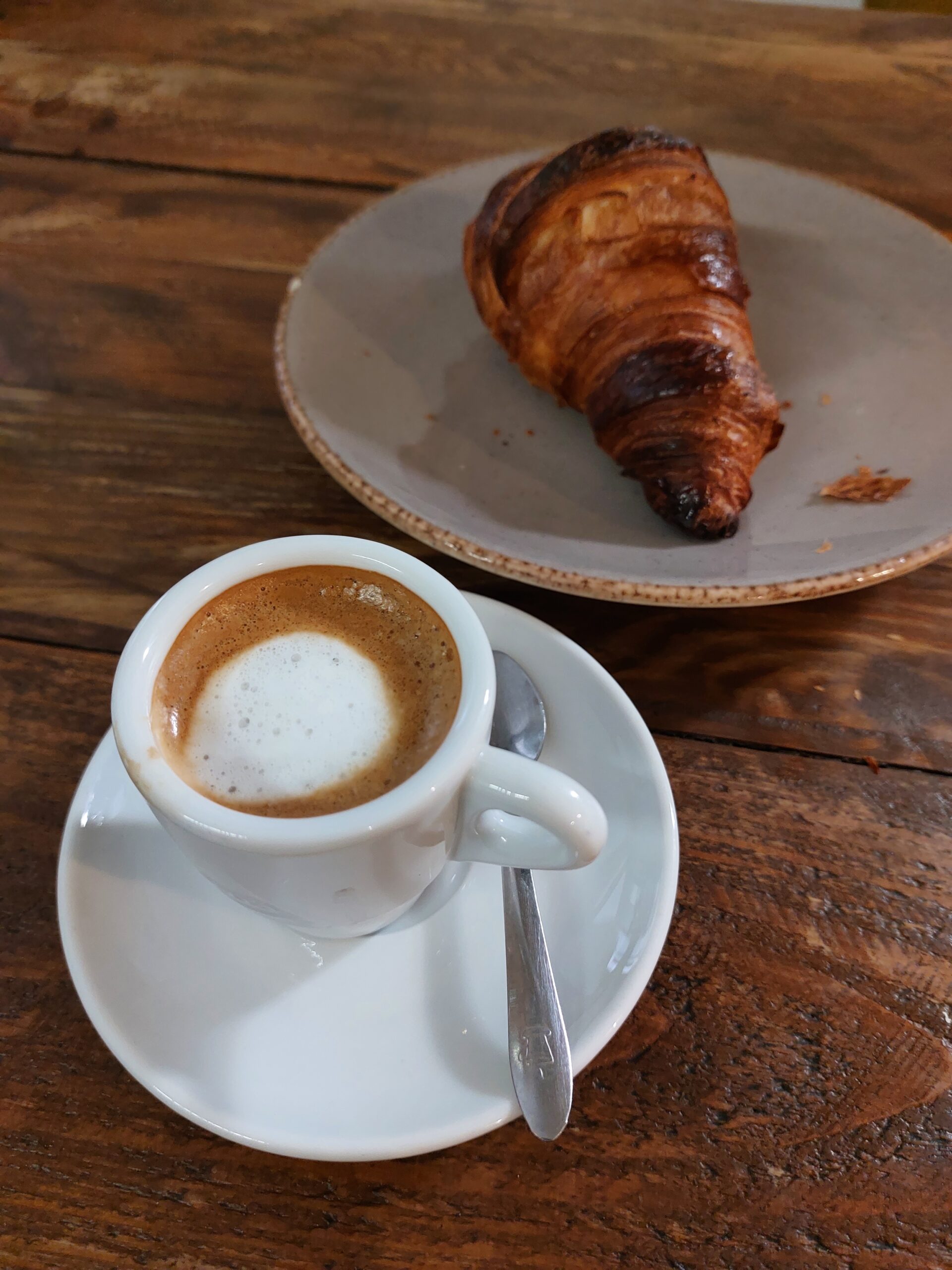
The croissant is Viennese by descent, a cousin of the Austrian kipferl brought to Paris by August Zang, who opened a Viennese bakery there around 1839. Its plainness is its strength with coffee. It’s all butter and crisp layers with little sugar, so it suits anything from an espresso to a big milky cup. In Italy the same idea is the cornetto, eaten with a cappuccino in the morning, or a brioche if you’re in the north. The Italian bar has firm views on when that cappuccino stops.
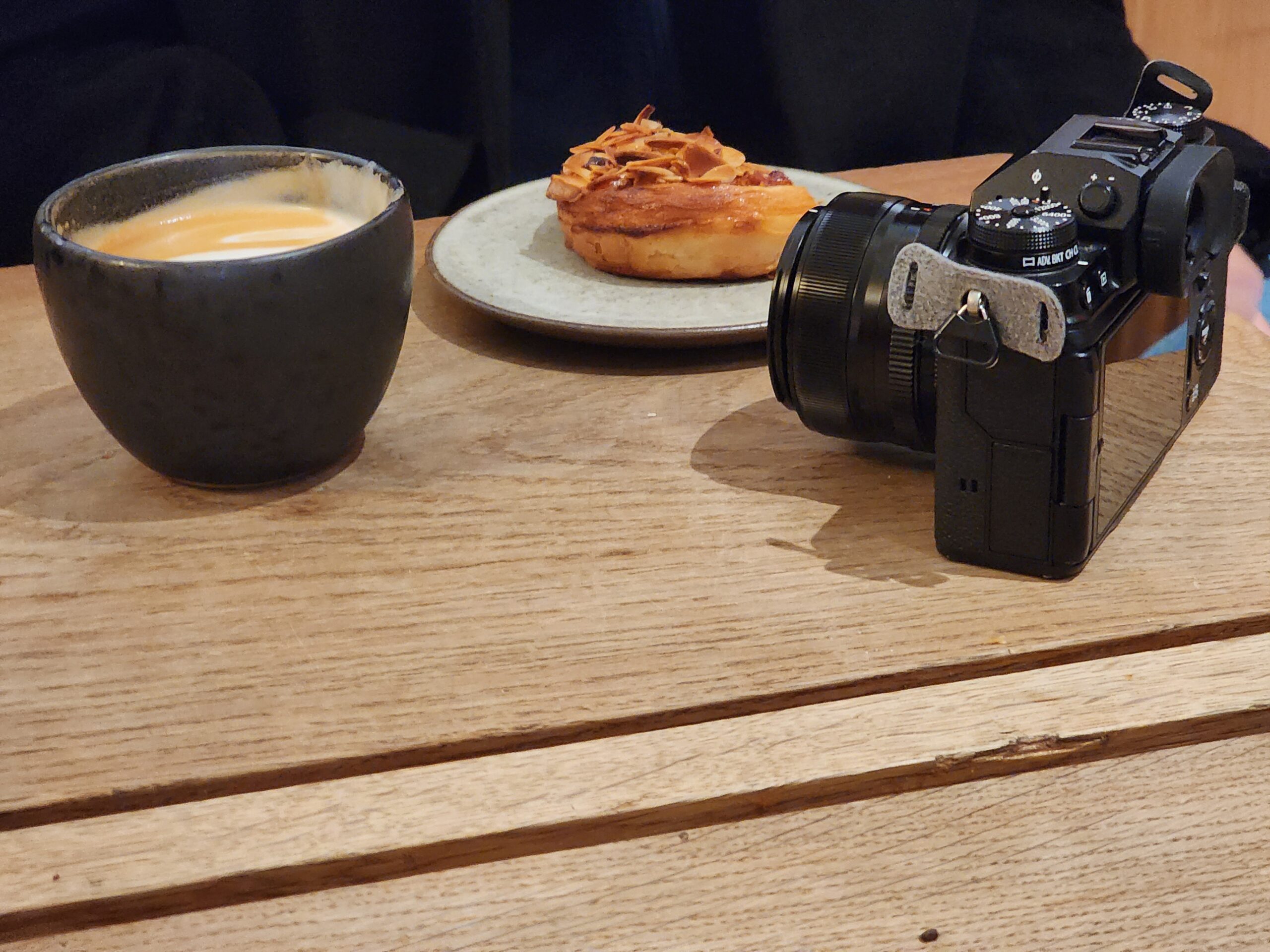
Almond pastries and fruit-and-cream croissants push things sweeter. An almond-topped pastry, like the one in the first photo, has the nutty, toasty flavors you also find in a medium roast, so a cortado meets it halfway. A strawberry and cream croissant is closer to dessert; the fruit’s acidity cuts the cream, and a milkier coffee keeps the whole thing from tasting too sharp.

A Few Rules of Thumb
- Plain, buttery pastries, such as croissants, medialunas de grasa and palmeras, go with almost anything and best of all with a strong, small coffee.
- Custard and cream want a little milk in the cup, a garoto or a cortado rather than a straight espresso.
- Very sweet things make black coffee taste harsher. A splash of milk evens it out.
- Keep it small. A cortado is gone in a minute, and the pastry should be too.