Spanish bars run on a short list of coffee words. Learn a handful and you can get exactly the cup you want in any bar from A Coruña to Cádiz. The cortado sits between the black coffee and the milky breakfast one, and it’s what a lot of people order after lunch.
The Basic Words
- Un solo: an espresso, black.
- Un cortado: an espresso cut with a little warm milk, in a small cup or glass. In most bars that means a splash, less than the one-to-one pour specialty cafés use.
- Un café con leche: a larger cup, roughly half coffee and half hot milk. The breakfast order.
- Un manchado or leche manchada: hot milk “stained” with a little coffee. Some bars read café manchado the other way round, as coffee with a stain of milk, so say leche manchada if you want the milky one.
- Un americano: espresso stretched with hot water.
- Un carajillo: an espresso with a shot of brandy, rum or anís, usually after lunch.
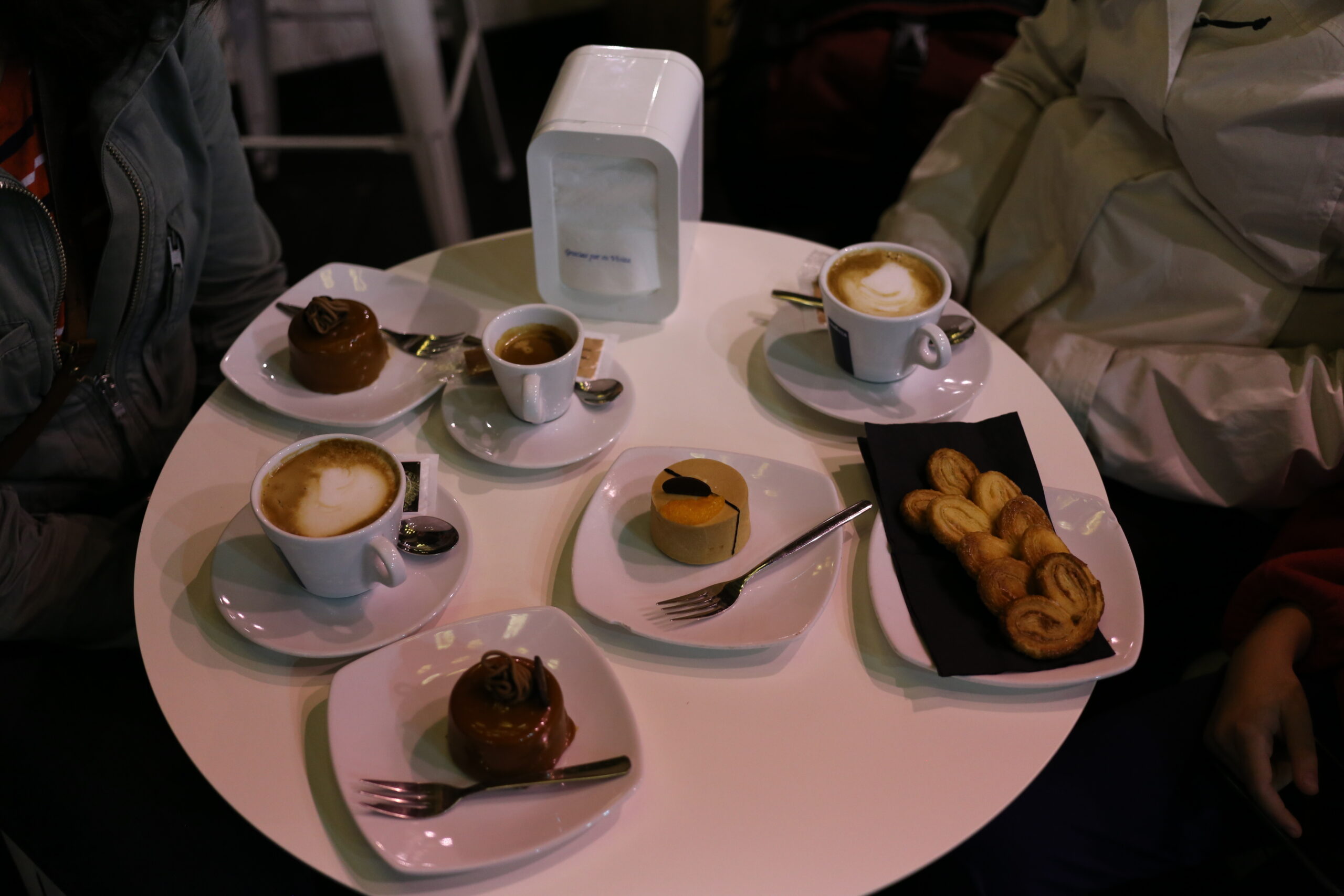
Then come the tweaks. You can ask for the milk fría, templada or caliente (cold, warm or hot), and many bars will ask before they pour. En vaso gets you a glass instead of a cup, and plenty of people take their cortado that way. For decaf, the question is whether you want it de máquina, from the espresso machine, or de sobre, a sachet of instant stirred into hot milk. Say de máquina unless you like instant.
In summer, a café con hielo arrives as two things: a hot coffee and a glass of ice. Sweeten the coffee while it’s hot, then pour it over the ice yourself. A cortado con hielo works the same way.
Regional Twists
The vocabulary shifts as you travel. Café bombón, a Valencian favorite now served all over Spain, is espresso layered over sweetened condensed milk in a small glass and stirred together at the table. Málaga goes further, with its own nine-step scale of names for how much milk goes in, from solo to nube. It confuses visitors from Madrid as much as it confuses foreigners.
The Canary Islands: Barraquito and Leche y Leche
The islands took the cortado somewhere sweeter. In Gran Canaria, ask for a leche y leche and you’ll get espresso and milk over a layer of condensed milk, served in a glass. Tenerife’s famous version is the barraquito, built in layers: condensed milk at the bottom, a splash of Licor 43, then espresso and milk, finished with a twist of lemon peel and a pinch of cinnamon. In some Tenerife bars a plain barraquito comes without the liqueur, so ask for a barraquito especial if you want it.
The name goes back to the middle of the last century and the Bar Imperial in Santa Cruz de Tenerife, where a regular named Sebastián Rubio, known as Barraquito, always ordered his cortado with exactly those additions. The nickname stuck to the drink. It’s a good story, and like most coffee origin stories, hard to check.
Standing at the Bar
A lot of coffee in Spain is drunk standing at the counter, and plenty of customers are in and out in two minutes. Nobody will hurry you if you sit, but the counter is where the rhythm is. A cortado suits it. It’s gone in four sips.