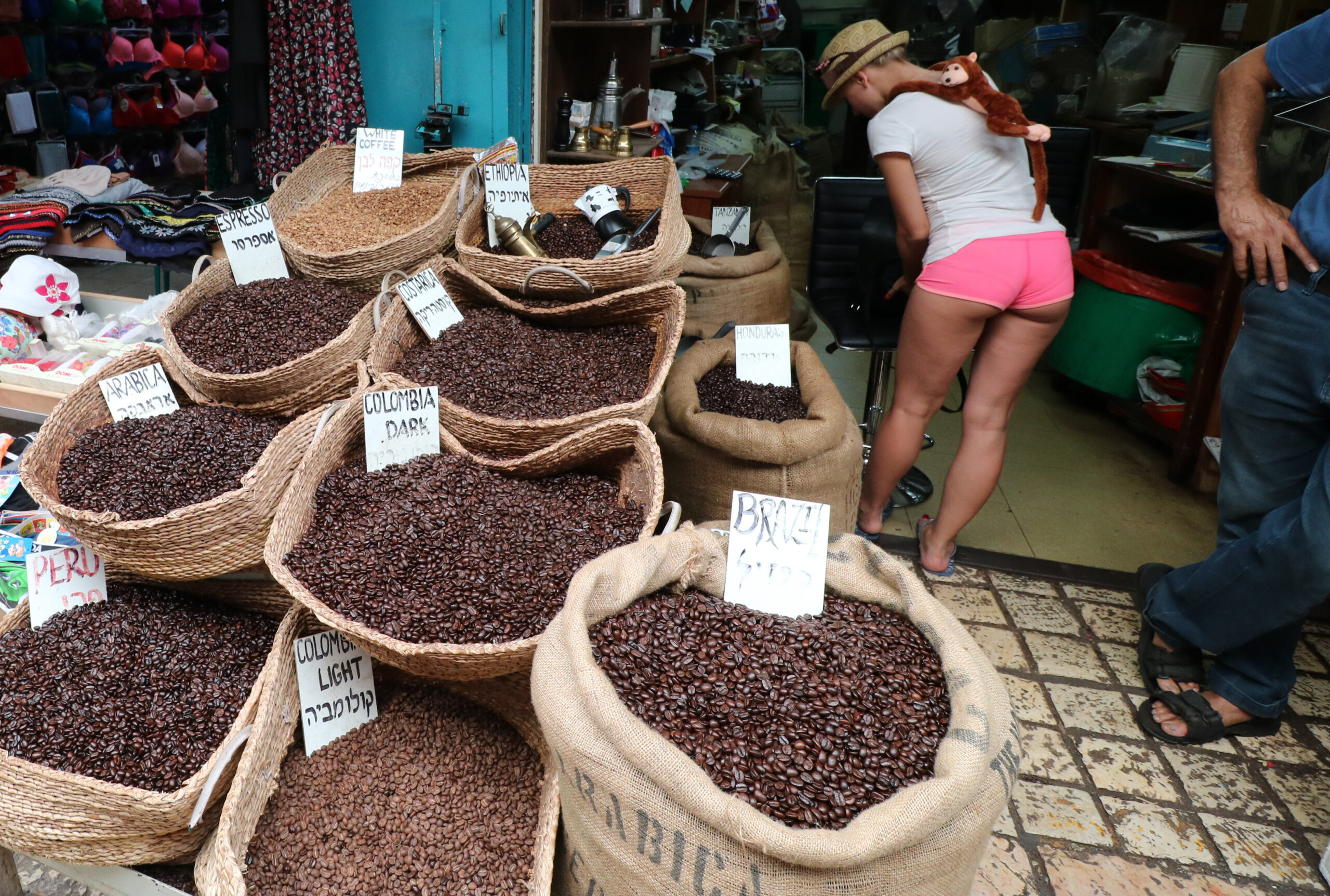
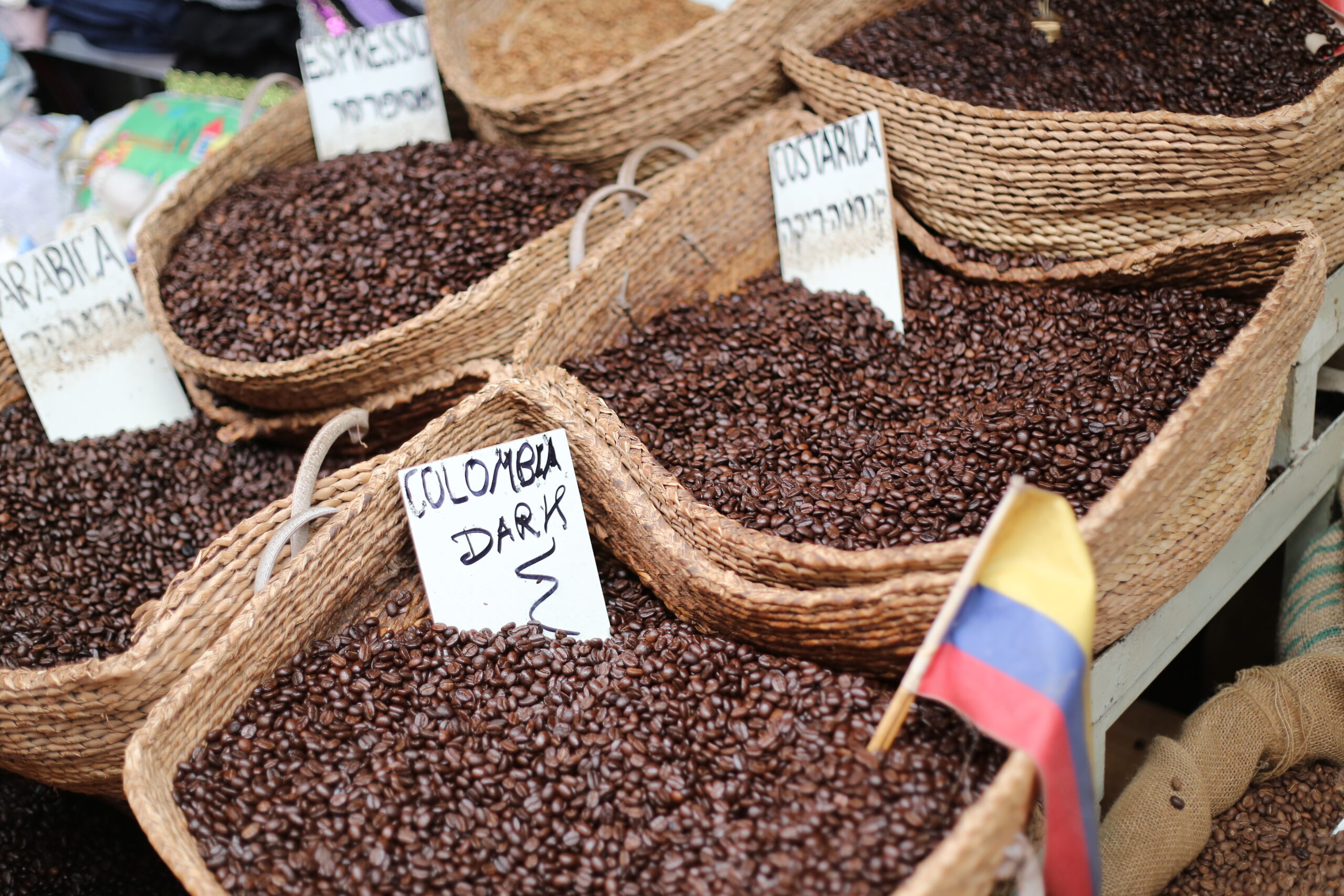
At a market stall that sells coffee by weight, two baskets sit side by side under handwritten signs: Colombia Light and Colombia Dark. The beans came from the same country, maybe from the same farm. The only difference is how long they spent in a roaster, and that’s enough to make them taste like two different coffees.
Roasting turns green coffee, which smells grassy and makes a thin, vegetal drink, into something brown, brittle and fragrant. Stop early and you keep more of the bean’s own acidity and fruit. Keep going and the roast takes over, with more bitterness and body and flavors that head toward dark chocolate and then smoke.
Which one you want depends a lot on whether you add milk.
What Happens in the Drum
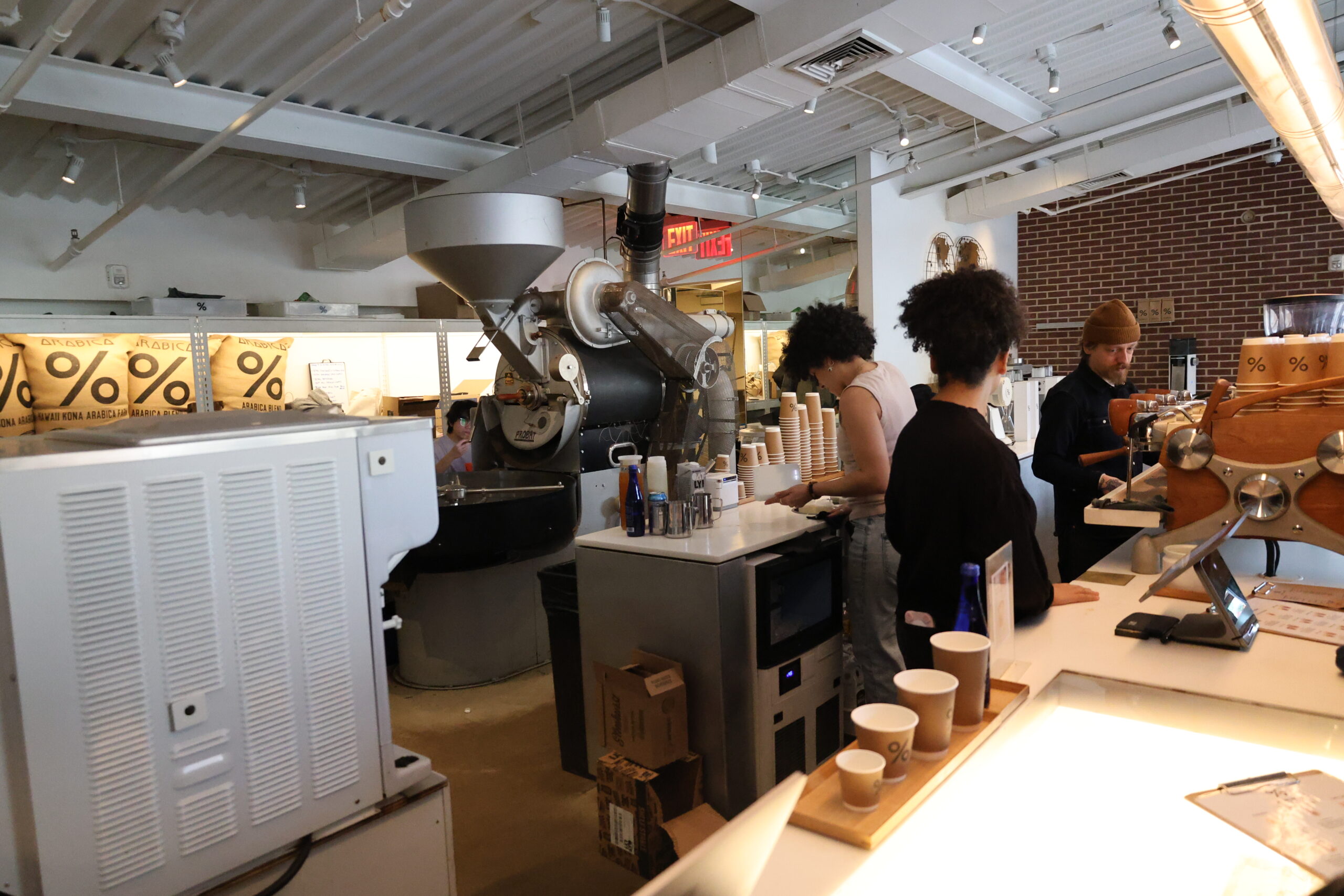
Most roasters use a rotating drum, heated by a flame or by hot air. For the first few minutes the beans just dry out. Green coffee is about 10% water, and by around 150°C (300°F) the beans have gone from green to yellow and started to smell like toasting bread. Then the browning takes over. Sugars and amino acids react with each other in the Maillard reaction, sugars caramelize, and together they build the brown color and much of the aroma.
Somewhere around 196°C (385°F) comes first crack, a popping sound like popcorn as steam and gas split the beans open. Very light roasts are dropped from the drum soon after it. If the roaster keeps going, a second, quieter crackle starts at around 224°C (435°F). That’s second crack, and it marks the start of dark roasting. The exact temperatures vary with the machine and where its probe sits, so roasters go by sound and color as much as by the thermometer.
A light roast might take ten to twelve minutes in a drum. Darker roasts run longer or hotter.
What a Dark Roast Loses
Beans lose weight all the way through. A very light roast, stopped as first crack begins, weighs about 10% less than the green coffee that went in. A medium roast loses about 15%, and a roast taken well past second crack can lose a quarter. Most of that is water. The rest goes up the chimney as gas and smoke.
At the same time the beans puff up. In one lab study their volume rose by about half while their density fell from 0.66 to 0.37 grams per milliliter. That’s why a kilo of Colombia Dark fills a bigger bag than a kilo of Colombia Light.
It also settles the old caffeine argument. Caffeine survives roasting fairly well, so gram for gram a light and a dark roast carry about the same. Measure by the scoop and the light roast wins, because its denser beans pack more coffee into the spoon. Weigh your coffee and the gap mostly disappears.
What a dark roast really gives up is acid. Measured acidity peaks around first crack and falls from there. The chlorogenic acids, the most plentiful acids in green coffee, drop steadily too: a study of 18 supermarket coffees found about 94 mg of them in a 200 ml cup of the lightest roasts and 31 to 38 mg in the darkest. Less acid is why a dark roast tastes rounder and heavier, and why a light roast can taste sharp.
Where Dark-Roast Bitterness Comes From
The bitterness changes as well, and so does the kind of bitter. Researchers at the Technical University of Munich traced much of the bitterness in light and medium roasts to compounds called chlorogenic acid lactones, which form as those acids break down. Roast further and the lactones break down in turn into phenylindanes, which taste harsher and linger longer. Caffeine, for all its reputation, accounts for only about 15% of coffee’s bitterness.
Dark roasts look different too. Around second crack the bean’s structure starts to give way and oils are pushed out to the surface, which is why a very dark bean looks shiny and a light one looks dry. Those oils end up in your cup, as we explain in is coffee a solution?
Southern Europe Roasts Dark, and Spain Adds Sugar
The coffee traditions this site is built around mostly lean dark. In Italy the south roasts darker than the north, and Italian espresso blends often include robusta. Spain went a step further. Much of its supermarket and bar coffee still contains torrefacto, coffee roasted with sugar, which leaves the beans with a dark, glossy coat. The method was patented in 1901 by José Gómez Tejedor in Badajoz and spread in the lean years after the Civil War.
Spanish law caps the sugar at 15 kg per 100 kg of green coffee, and a blend has to say what’s in it: mezcla, with the percentages of natural roast and torrefacto printed on the pack. Supermarket blends are often half and half. Argentina, Uruguay and Paraguay have their own version, called café torrado. If you’ve ever found a Spanish bar cortado harsh and a little burnt, torrefacto is a likely reason.
Which Roast Suits a Cortado
Milk changes the math. Its proteins, casein above all, bind to coffee’s chlorogenic acids, and in taste tests more milk protein meant less bitterness, less astringency and less sourness. That’s why a dark roast that tastes harsh on its own can taste smooth in a cortado. Specialty roasters say very light roasts, made for filter, tend to be too acidic for espresso and get lost in big milk drinks, so for milk they look for coffees with chocolate, caramel and nutty flavors and lower acidity.
A cortado is a small drink, though, with about as much milk as espresso, and that gives you room. A medium to medium-dark roast is the safe choice: dark enough for chocolate and caramel flavors to come through the milk, light enough to still taste of the coffee. A dark Italian-style blend works too, and it’s the classic choice in Spanish and Italian bars. A light roast can make a lovely cortado if you like it bright, since there’s much less milk to drown it than in a latte.
Some roasters print a color reading on the bag, from a scale called Agtron, where a higher number means a lighter roast. Readings above 70 are light, 60 to 70 medium, 50 to 60 medium-dark, where oil starts to show on the beans, and below 50 dark. If your bag has one, it’s more useful than names like City or French, which mean different things to different roasters.
And if you ever see Light and Dark from the same origin side by side, buy a little of each. It’s the quickest roasting lesson there is.