As an Amazon Associate I earn from qualifying purchases.
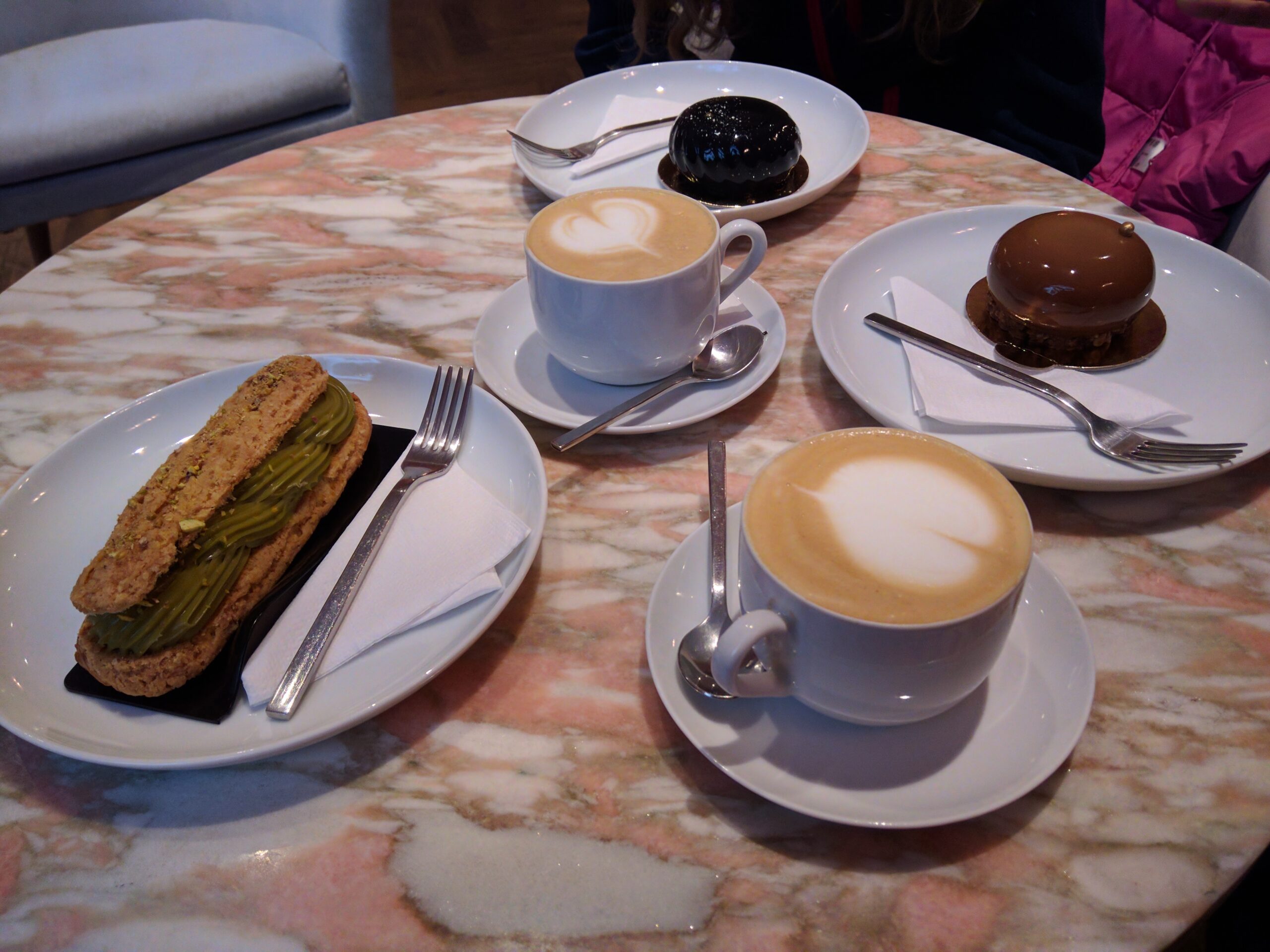
The heart on top of a flat white is decoration, and it’s also a report on the milk. To pour one, a barista needs milk steamed into microfoam, a fine, glossy texture that flows like wet paint. Get the milk wrong and there’s no heart, however steady the hand that pours it.
So when your cup arrives with a crisp white shape on a brown background, you’ve learned something before the first sip: the milk had the right amount of air worked in at the right time, and it wasn’t overheated. A blob of stiff foam, or no pattern at all, tells you something too.
What Microfoam Is
Milk foam is air held in milk by its proteins, which gather around each bubble and stop it from bursting. Microfoam is milk full of bubbles too small to see, so it looks shiny and slightly thickened, a bit like melted marshmallow, and it pours as one liquid. The stiffer foam that sits on a traditional cappuccino has bigger bubbles and holds its shape, which is exactly why you can’t draw with it.
Milk protein is about 80% casein and 20% whey, and both help hold the bubbles. Fat works against foaming but makes the foam silkier. Skim milk makes a very stable foam that’s often too rigid for fine patterns, while whole milk, at 3 to 3.8% fat, pours smoother, and it’s the milk latte art competitors are given to work with. Barista versions of oat milk get their pourability from added oil and a stabilizer; Oatly’s uses rapeseed oil and dipotassium phosphate, which stops it separating in hot coffee.
How a Barista Gets There
Steaming happens in two stages. First comes stretching. The steam wand’s tip sits just under the surface and pulls air in with a soft, papery hiss. That has to happen while the milk is still cold, and it should stop by the time the jug feels about body-warm, around 35°C, because air added later makes bigger bubbles. Then the tip goes a little deeper, the milk spins in a whirlpool, and the air gets folded in until the texture is even.
The milk comes off at around 55 to 60°C (130 to 140°F). Much hotter and it starts to taste flat: whey proteins begin to break down from about 65°C, and held at 75°C milk picks up a cooked taste. A tap on the counter and a swirl of the jug deal with any stray bubbles, and then the milk has to be poured quickly, before the foam starts to separate.
Hearts, Tulips and Rosettas
The pour does the drawing. It starts from a few centimeters up, so the milk dives under the crema and mixes with the espresso, lifting the surface without marking it. When the cup is about half full, the barista tilts it and brings the spout right down to the surface. Now the foam floats instead of sinking, and whatever the jug does shows up in white.
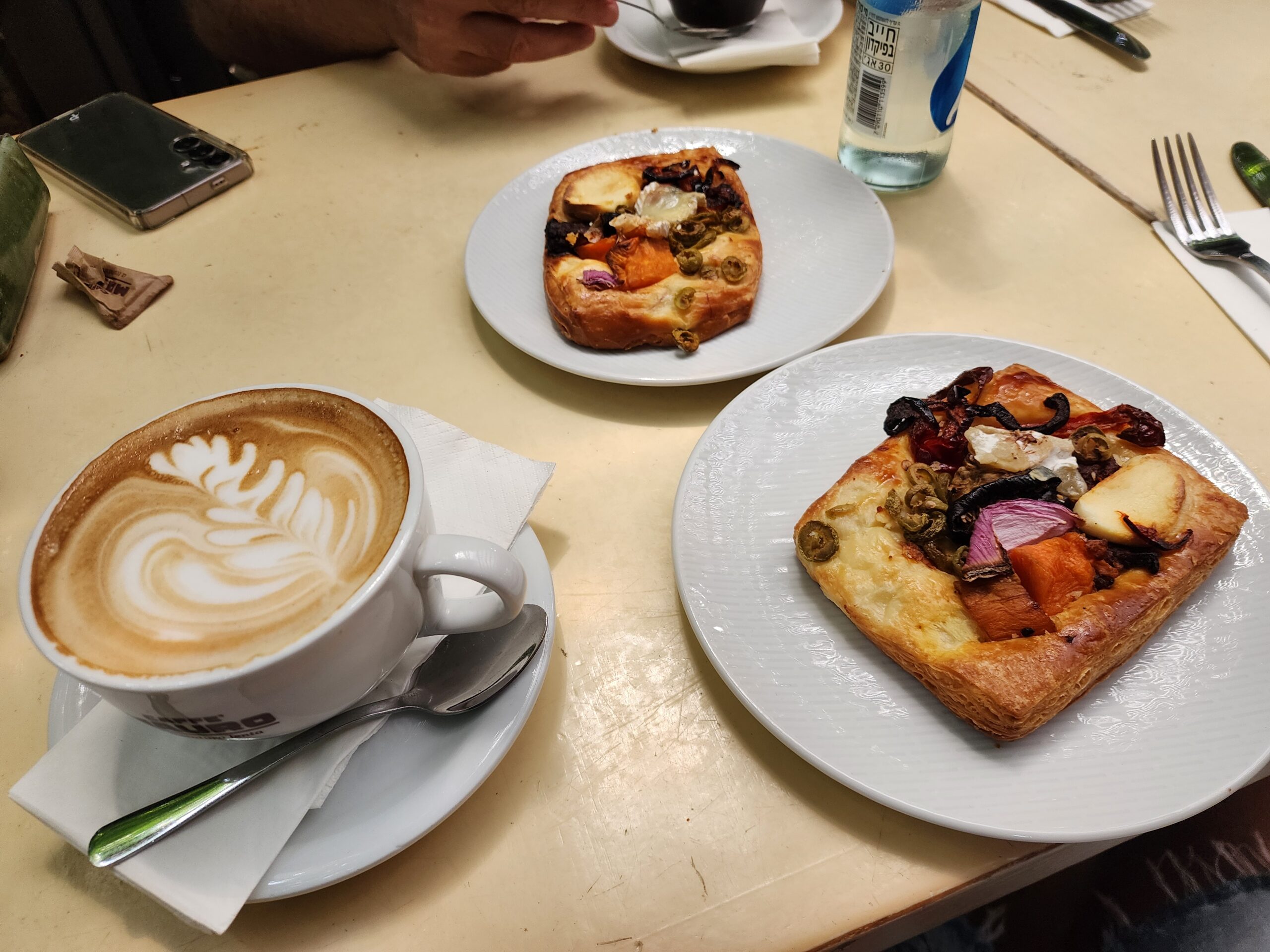
A heart is the first pattern most baristas learn, and a jug with a pointed spout, like the Barista Hustle pitcher, makes it easier (our milk pitcher guide covers sizes). The method: hold the spout still, let a white circle grow, then lift and pull through the middle. A tulip is several small hearts pushed into each other. The rosetta, the fern-like one, is harder. The barista rocks the jug from side to side as the white spreads and moves back across the cup, then pulls a line through the leaves to finish.
These patterns have a Seattle story behind them. In 1988, at Espresso Vivace’s first coffee cart, a barista named Sarah Hunting poured against the back of the cup and made a shape like a bee. The next year another barista, Lisa Persons, learned to pour a clean heart. When the café’s manager, who grew up in northern Italy, saw it, he said he hadn’t seen that since he was a child in the hills above Turin, where they called it a rosetta. Vivace’s founder, David Schomer, worked out the fern-shaped rosetta later.
So the art was already known in Italy, and in the late 1990s Schomer swapped videos with an Italian barista, Luigi Lupi. There’s a World Latte Art Championship now. The 2026 title went to a competitor from Chinese Taipei at the final in San Diego, and the 2027 contest is set for Lisbon. In 2014 a Kyoto barista, Junichi Yamaguchi, won a latte art world championship in Tokyo, and the café he worked for, % Arabica, went on to open stores around the world.
Reading Your Cup
- A clean, glossy pattern with sharp edges: the milk was stretched early, textured well and poured fresh. Expect a smooth, sweet drink.
- Visible bubbles or a foamy surface like a bubble bath: air went in too late or for too long, so the bubbles came out big.
- A stiff white cap and no pattern: too much foam. Fine on a cappuccino, wrong on a flat white or a cortado.
- A pattern that blurs into beige: the milk sat too long before it was poured, or the pour stayed too high all the way through.
What latte art can’t tell you is how the espresso tastes. A beautiful rosetta can sit on a sour, underextracted shot. It tells you about the milk and the person who poured it, and that’s still worth knowing.
Why It Fades
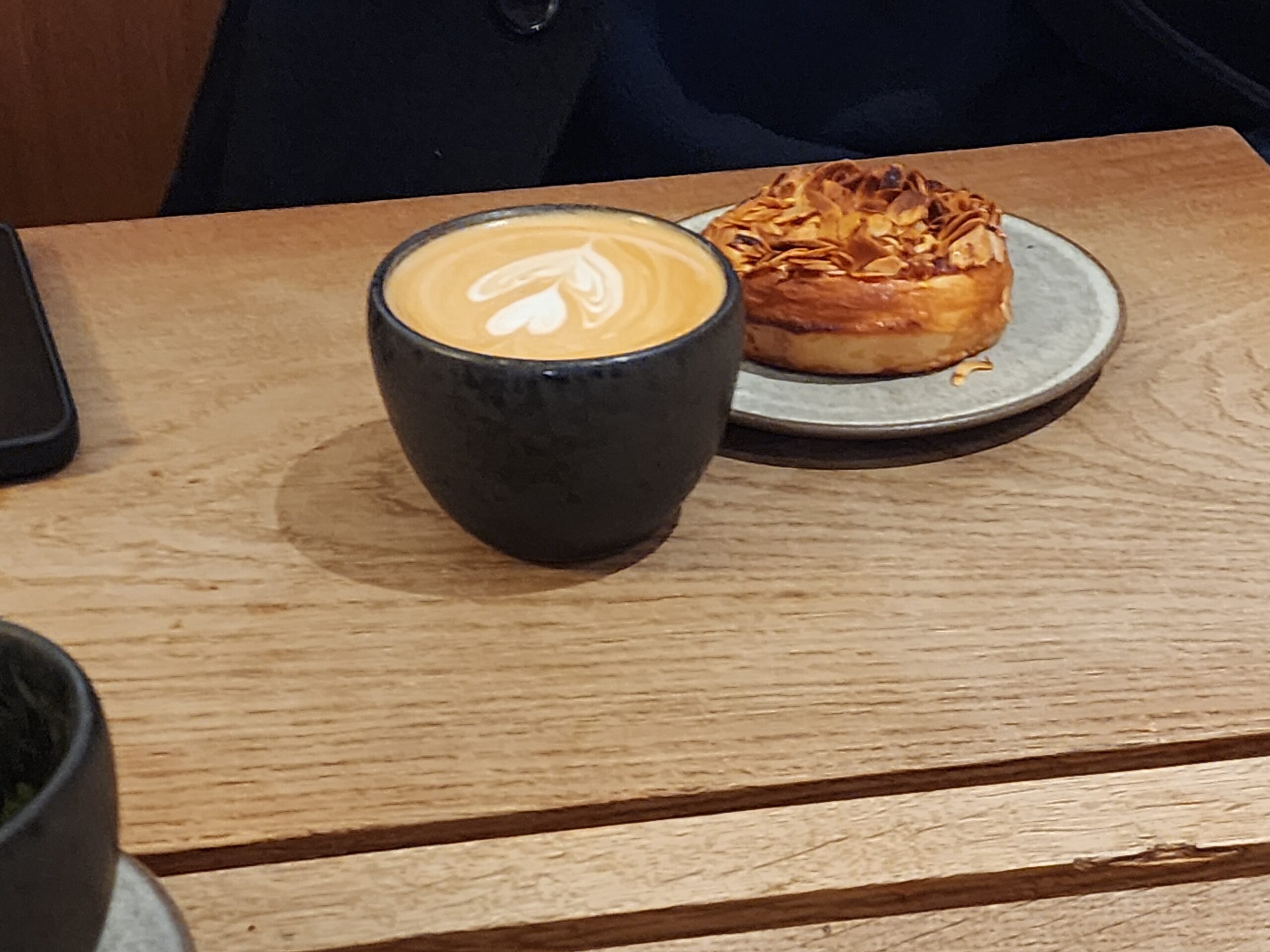
Latte art doesn’t last. Liquid drains down out of the foam, and small bubbles shrink while big ones grow until they pop. After two or three minutes you can start to see bubbles, and the edges soften. That’s one reason specialty cafés hand milk drinks over straight away, and a good reason to look at the pattern before you stir.
On a cortado the canvas is tiny. A traditional Spanish cortado has hardly any foam at all, so there’s nothing to draw with. Most specialty cafés steam in a little microfoam so they can pour a small heart, and in a Gibraltar glass, with a rim under 8 cm across, that’s about all that fits. A flat white, with its thin layer of microfoam across a wider cup, is where the rosettas live. For how the two drinks differ, see cortado vs flat white.