From the door, the two chains could be one: white walls, pale wood, a long counter with the espresso machine up front and very few seats. Blue Bottle started with a coffee cart at an Oakland farmers market in 2002. % Arabica, the one with the percent-sign logo, opened its first café in Hong Kong in 2013 and made its name in Kyoto a year later.
By September 2026 they’d gone in very different directions. % Arabica listed 245 stores in 29 countries and territories. Blue Bottle had been sold by Nestlé to the controlling shareholder of China’s Luckin Coffee, reportedly for less than Nestlé paid for most of it in 2017.
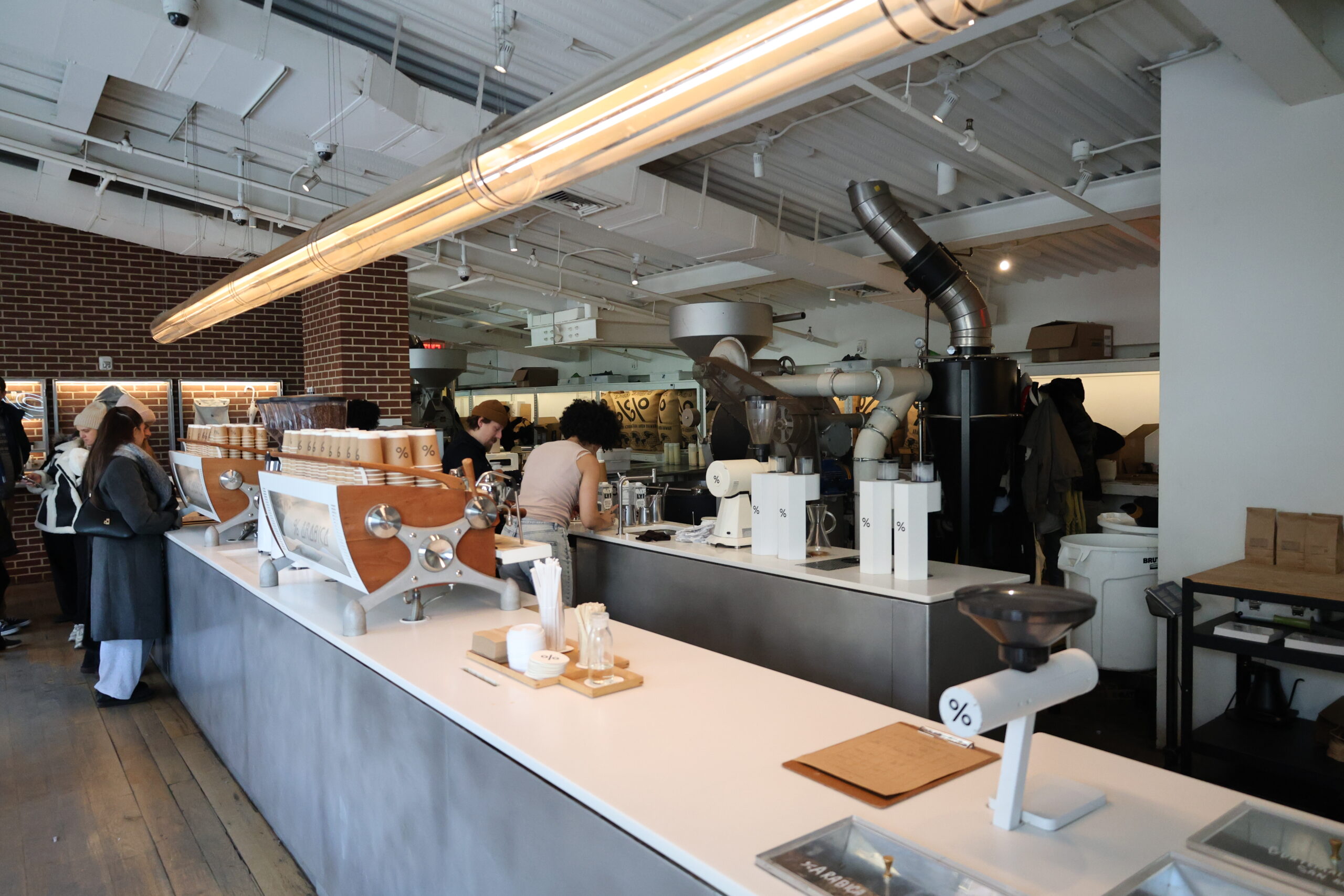
% Arabica: A Hong Kong Start and a Kyoto Queue
The founder, Kenneth Shoji, was born in Tokyo into a family printing-materials business and went to college in California, where he got hooked on coffee in the 1990s. After the 2011 earthquake destroyed his home in Fukushima, he moved to Hong Kong and went into the coffee trade. He dealt in green beans, distributed Slayer espresso machines in Japan and Chemex brewers in Asia, and exported small roasters.
The first % Arabica café opened in Discovery Bay, Hong Kong, in 2013. The one that made its name opened in September 2014 in Higashiyama, Kyoto, below the Yasaka pagoda, with white walls, almost nowhere to sit and a queue that lasted all day. Its head barista, Junichi Yamaguchi, won a latte art world championship in Tokyo that year. The logo, Shoji has said, looks like coffee cherries on a branch, and he liked that anyone could type it.
The growth came through franchising. Apart from the three Kyoto stores, which the company runs itself, % Arabica shops are franchises, and that’s how it got to 245. Mainland China has the most, 80, followed by the United Arab Emirates, Kuwait and Hong Kong. The United States has just five, although when the first opened in Dumbo, Brooklyn, in June 2021, the plan was a hundred American stores within ten years.
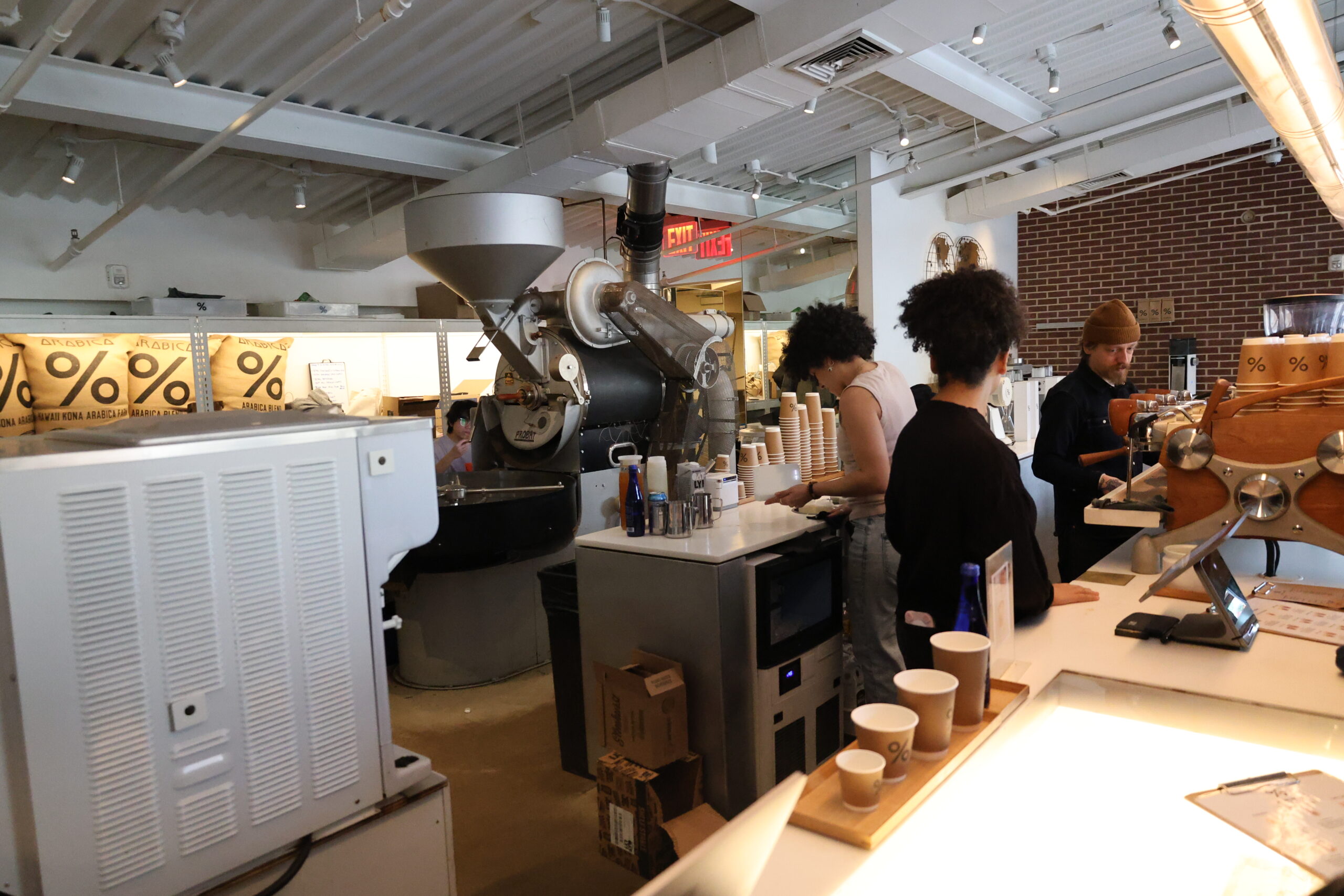
Some stores roast on site. The Brooklyn shop was fitted with a Probat roaster from the 1920s and a small one-kilo machine, and customers there could pick green beans and have them roasted in about ten minutes. For a while the company also owned a small coffee farm in Kona, Hawaii. It sold the farm during the pandemic, though the sacks in the photo above still carry the Kona name.
Blue Bottle: A Clarinetist’s Cart, Then Nestlé
James Freeman was a freelance clarinetist when he started Blue Bottle in 2002 with about $20,000, some of it on credit cards, roasting in a potting shed in Oakland and selling at the farmers market. The name comes from a Vienna legend about one of Europe’s first coffee houses, a story we take apart in our Vienna coffee houses post. The first permanent spot was a kiosk in a garage in San Francisco’s Hayes Valley in 2005. Blue Bottle is also where the Gibraltar, San Francisco’s cortado in a glass, got its start.
Freeman modeled the cafés on Apple’s stores. The palette was blue, fog grey and blond wood, and there was no Wi-Fi and nowhere to plug in a laptop. By 2014 investors were pitching Blue Bottle as the Apple to Starbucks’ Microsoft. It had already opened in Tokyo in 2015 when Nestlé bought 68% of the company in September 2017, for a reported $425 million. Seoul followed in 2019, Hong Kong in 2020 and Shanghai in 2022.
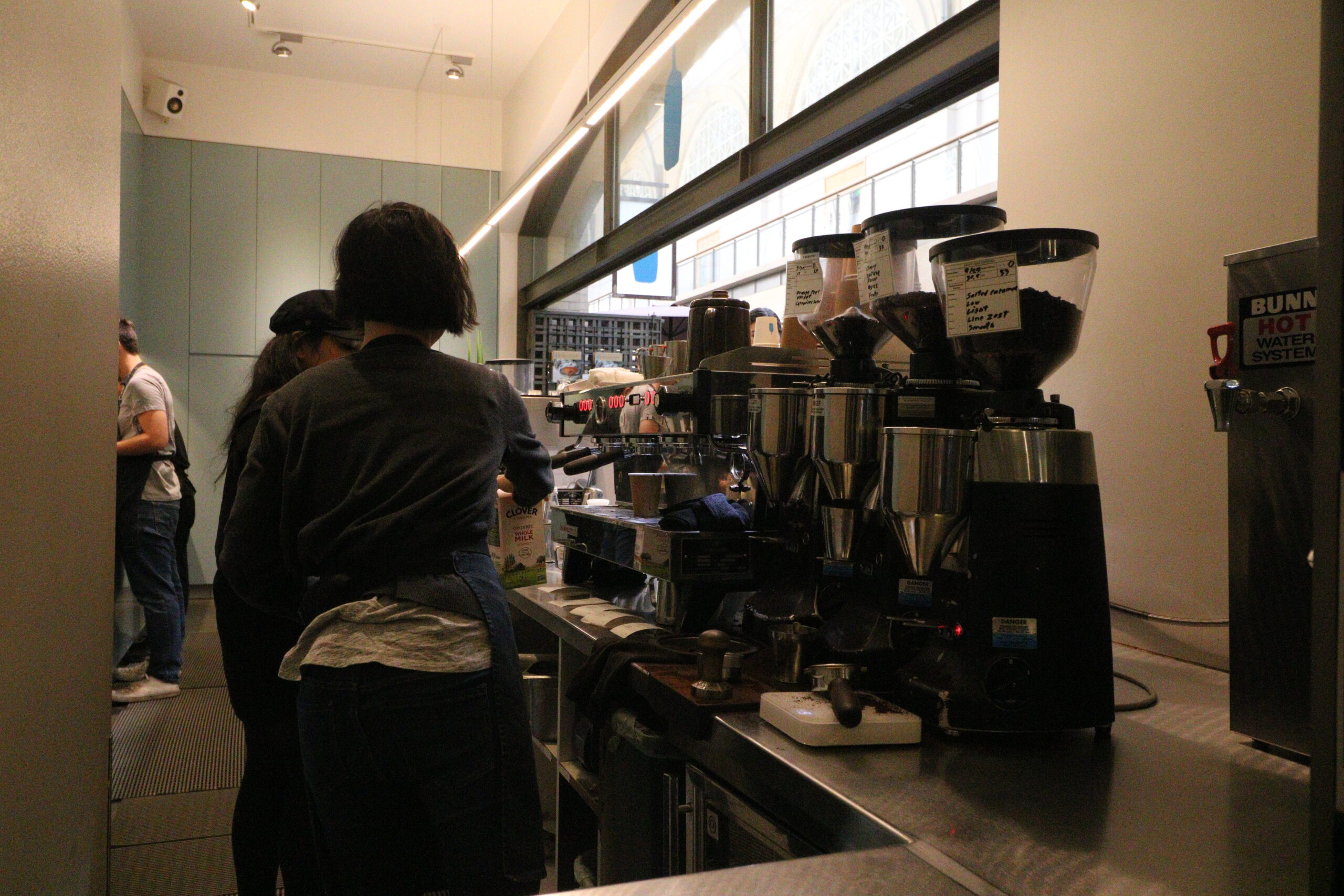
It never became the next Starbucks. Nestlé later took full ownership, and in late 2025 it began looking for a buyer. In March 2026 Centurium Capital, the private equity firm that controls Luckin Coffee, agreed to buy the chain, for less than $400 million according to reports at the time. Nestlé confirmed the sale in April. Centurium got the cafés, more than a hundred across the United States and Asia, and most of the packaged coffee business. Nestlé kept the Blue Bottle pods it makes for Nespresso machines.
The Look They Share
Both chains sell the same idea: good coffee in a quiet, pale room, with the equipment on show. Some % Arabica stores keep the roaster behind the bar, and Blue Bottle built its name on pour-overs made one cup at a time. Critics have a name for the style. In 2016 the writer Kyle Chayka called it AirSpace, the same pared-back look repeated in café after café around the world, and summed it up in a line that stings on a site like this one: “You can get a dry cortado with perfect latte art at any of them, then Instagram it on a marble countertop.”
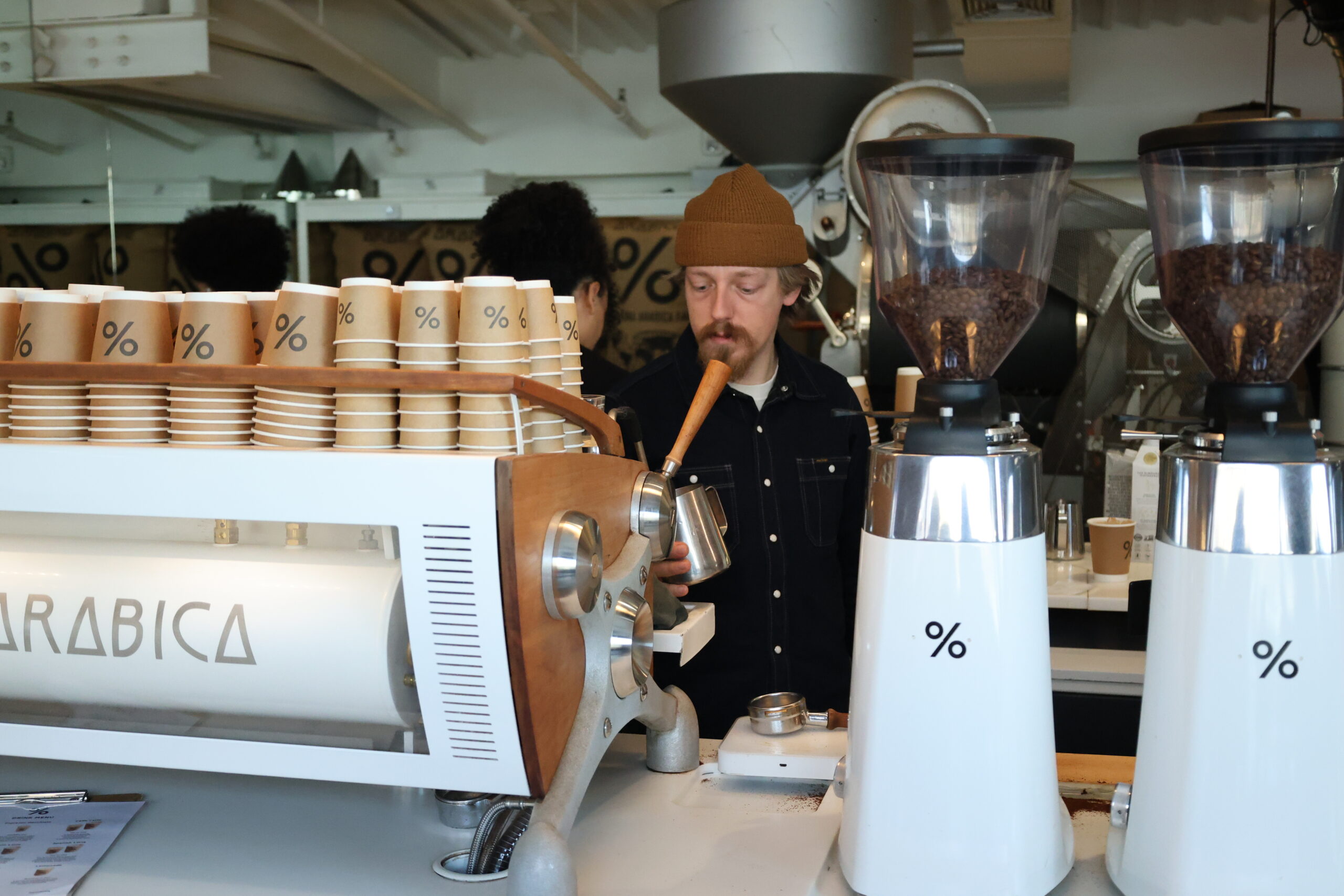
The prices come with the look. A drink at % Arabica in Japan costs around ¥550, and Shoji once said anything over ¥600 would feel expensive there. When Blue Bottle opened in Seoul in 2019, a latte cost 6,100 won, about $5.20.
Two Ways to Grow
The difference that mattered was ownership. % Arabica let franchise partners pay for its expansion and ended up with far more stores, 80 of them in mainland China alone. Blue Bottle ran its own cafés, took a food giant’s money to grow, and was sold on nine years later for less than that money had bought. Now Blue Bottle belongs to the backer of Luckin, the chain that filled China with thousands of cheap, app-ordered coffee shops, and % Arabica’s biggest market is already mainland China. That’s where the pale-wood café will be tested next.